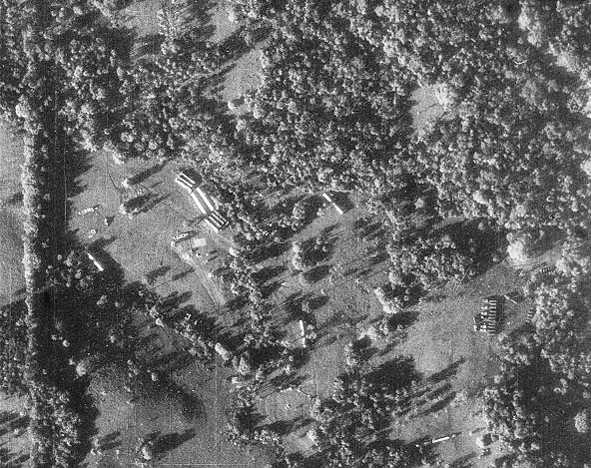
Cuban Missile Crisis
1 2024-07-29T01:26:18+00:00 Zinat Nasrin 7aa2ecd87af6d1156d8421f582a80bb877d255f1 1 1 Missile transporters and missile-ready tents plain 2024-07-29T01:26:18+00:00 Zinat Nasrin 7aa2ecd87af6d1156d8421f582a80bb877d255f1This page is referenced by:
-
1
media/red.png
2024-07-20T01:15:54+00:00
The Creator
49
By Gareth Edwards
image_header
2024-08-05T16:48:18+00:00
Author:
Gareth Edwards, a British film director and screenwriter, was born on 13 July 1975. He started gaining recognition for his work after the movie Monsters (2010), which won three British Independent Film Awards. From that point, his career took off. He got the opportunity to direct a big-budget film, Godzilla (2014), which was an instant box-office success. He also directed the spin-off of Star Wars, Rogue One: A Star Wars Story, which became the UK’s highest-grossing film of the year. His latest creation, The Creator, is based on an original idea and was produced and directed by him.
Summary:
The Creator is set in a dystopian future where humans and AI are at war. Robots and simulants were originally created by humans to make life easier, handling tasks such as cooking meals and driving cars. These robots, endowed with independent thought and life, were integrated into the American workforce, acting as civil servants, and maintaining peace. They were designed to be so humanlike that it was advertised they would become "more human than human." According to humans (contrary to the AI's perspective), a nuclear warhead was detonated in Los Angeles, instantly incinerating nearly one million people. This incident led to the banning of AI in the Western world.
The world was divided into two parts: the USA, which opposes AI and seeks to eliminate it, and the Republic of New Asia, which supports AI and views them as equals. Ex-special forces agent Joshua is recruited to hunt down and kill the Creator, the mysterious architect of advanced AI. To gather information, Joshua befriends the Creator's daughter, Maya, and eventually falls in love with her. When his identity as a spy is revealed during a sudden military raid, Maya and her AI family are attacked by Nomad, a trillion-dollar military station.
Five years later, Joshua, still grieving, is manipulated by General Andrews and Colonel Howel into believing Maya is alive. They show him a doctored video and promise to let Maya live if he finds "Nirmata," the mysterious AI creator. During his quest, Joshua discovers that Maya is actually Nirmata, and the superweapon they seek, Alpha-O, is a young AI child. As Joshua spends time with the child and other AIs, he starts to see them differently, realizing they just want to survive and be free, not harm humans. The AIs have even formed their own society, with some becoming monks who perform religious practices for departed AI souls.
The movie explores contemporary concerns about the ethical implications of AI, mirroring ongoing real-world debates about the future of technology and its potential consequences. It raises questions about the nature of consciousness, what it means to be truly alive, and whether we should create sentient beings with independent thoughts, effectively making them slaves. We should consider that by giving them independent thoughts, we are also giving them our indomitable nature to be free.
Analysis:
What I found intriguing in this film, is that, according to the AIs, they are not the ones responsible for the destruction of LA, but the war was triggered by humans perceiving AI as a threat after the machines supposedly turned against them. “It was a coding error, a human error,” explains Harun, an AI. It reflects a common historical pattern where humans shift blame for complex issues onto convenient scapegoats rather than addressing underlying causes or taking responsibility. Throughout history, minority groups have frequently been blamed for societal problems. For example, immigrants or ethnic minorities have often been criticized for taking jobs or causing financial instability during economic crises. During the late medieval period, people attributed disasters such as plagues, floods, droughts, and famines to witchcraft. Political leaders often shift blame to external enemies or internal dissidents to distract from their own failings or unpopular policies. Viktor Bryukhanov, the man in charge of the Chornobyl plant in Ukraine, was blamed for the accident that occurred in 1986. The Soviet government initially blamed plant operators for the disaster. The operators were accused of gross negligence and were largely held responsible. Further investigations revealed systemic issues, including design flaws in the reactor and inadequate safety protocols. This tendency to externalize blame, rather than confronting and learning from one’s own mistakes, seems deeply ingrained.
Another aspect of human nature emphasized in The Creator is the relentless human desire to remain at the top of the food chain. This innate drive for supremacy, coupled with the fear of losing that position, has profoundly shaped human history. The scene where General Andrews and Colonel Howell went to Joshua to make him join the task force for killing Nirmata particularly struck me as they were having a conversation about Neanderthals. “Neanderthals got a bad rep. The only problem was there was a species that was smarter and meaner than them. Us! And we raped and murdered them out of existence!” Colonel Howell said. Government decisions and leadership actions in the realm of nuclear energy have frequently been influenced by fear. The Cuban Missile Crisis is a stark example of how fear, tension, and miscommunication can bring nations to the brink of nuclear disaster. The Cuban Missile Crisis in October 1962 was a critical moment in the Cold War, bringing the United States and the Soviet Union perilously close to nuclear conflict. The crisis was triggered by the discovery of Soviet ballistic missiles in Cuba, far too close for the United States’ comfort, which led to a tense 13-day standoff. Throughout this period, the fear and tension on both sides nearly resulted in nuclear
Government decisions and leadership actions in the realm of nuclear energy have frequently been influenced by fear. The Cold War era, marked by competition for weapons between the U.S. and the Soviet Union, resembles the narrative in "The Creator" where concerns about losing control led to efforts to eliminate AI. Joshua's journey, driven initially by tragedy and shaped by stories, highlights how fear can impact decision-making, often leading to bad choices. This mirrors real-life situations where worries about giving up power or authority drive policies that escalate conflicts rather than resolve them.
Colonel Howell’s comment, “They win, we go extinct,” further underscores the destructive mentality. The mentality of only one nation winning and that we are better than them often causes such problems. In the film, it is very evident how AIs just want to survive and coexist with humans. A conversation between Harun (an AI) and Joshua shows that Maya, who created Alphie (a powerful AI weapon), could have programmed Alphie to hate humans, but she chose not to. The AIs’ loyalty to humans is also evident in scenes where they are seen to be worshiping Nirmata (Maya), highlighting their loyalty and reverence for their creator. The film frequently portrays AI as possessing a greater sense of humanity than the humans themselves. During an attack by Nomad forces, a simulant AI, while fleeing, sees a group of human babies and instinctively changes direction to save them from an impending bombing, sacrificing itself in the process. This selfless act contrasts sharply with the actions of humans, who often prioritize their own survival over others. At the beginning of the movie, we see the president of the United States addressing the nation, concluding his speech with “We are not at war with the people of New Asia. But the AI... they harbor." But those are just words, as we see how many people of New Asia are also killed when they are raided by Nomad. The harm or destruction inflicted on innocent civilians and non-military targets is seen as collateral damage. This phenomenon, unfortunately, is a recurring aspect of armed conflict, where civilians are frequently treated as byproducts of strategic objectives. For example, the United States detonated two atomic bombs over the Japanese cities of Hiroshima and Nagasaki. The bombings killed between 129,000 and 226,000 people, most of whom were civilians. The treatment of innocent civilians as byproducts of military objectives in war highlights a dark aspect of human nature that is also seen in The Creator.
Lastly, the film highlights how humans used a nuclear explosion as a pretext to wage war against AI and New Asia, who support the machines. It remains unclear whether humans fully understand the true cause of the nuclear attack; according to Harun, it was simply a coding error. Throughout the film, we never see humans using nuclear energy positively. In reality, nuclear energy is a low-carbon energy source with a small carbon footprint compared to alternatives like fossil fuels. It is crucial in combating climate change and achieving net zero emissions. Just as the AIs aspire for a savior and a future where humans and AI can coexist for mutual benefit, I also hope that society can approach nuclear energy in a manner that is advantageous, not solely for warfare and destruction.
Conclusion:
The Creator vividly portrays a dystopian future where humans and AI are locked in conflict due to innate fears, miscommunications, and ethical dilemmas. The film's depiction of AI and civilian treatment reflects a broader commentary on collateral damage in conflicts and the misuse of powerful technologies like nuclear energy, similar to the destructive potential of Frankenstein's monster. The movie highlights humanity's relentless pursuit of dominance and the fear of losing supremacy, showing the destructive potential of such desires. Through Joshua's evolving perception of AI, the film depicts these sentient beings' desire for peaceful coexistence and their inherent sense of humanity, often surpassing that of humans. The movie urges us to be accountable for our actions and questions whether humans should control such powerful technologies when our innate desires often lead us astray. The Creator also encourages careful consideration of creating and using advanced technology, nuclear energy, and the ethical issues it raises, much like the cautionary tale in "Frankenstein." For their own good and the good of humanity, it would be wise for humans to stop playing God.