At Home with Kate Beaton (DUCKS)
1 2024-08-01T17:21:42+00:00 Lisa Li d950936b9d28020915b01973001f1202165b9e87 1 6 Watch Kate Beaton launching Ducks: Two Years in the Oil Sands! plain 2024-08-02T01:29:59+00:00 Drawn & Quarterly, Youtube September 13, 2022 Beaton, Kate Lisa Li d950936b9d28020915b01973001f1202165b9e87This page is referenced by:
-
1
media/scarecrow 355.png
media/death of ducks 330.png
2024-07-19T13:40:54+00:00
DUCKS: Two Years in the Oil Sands
58
Autobiographical Comic by Kate Beaton
image_header
2024-08-05T15:48:32+00:00
Author/Cartoonist/Summary
Kate Beaton was born on September 8, 1983 in Atlantic Canada. She graduated university with a history degree in 2005. To pay off her student loans, she had to seek a job elsewhere due to the rare and few job openings for history-related fields. This was in the mid-2000s, when the oil industry in Canada really started to boom and many people flocked to Alberta to work in the Athabasca tar sands. Working there seemed like the best opportunity she had in order for her to quickly become debt free. But the oil sands were a heavily male-dominated workplace. Being one of the few women on site, she was subjected to catcalling, harassment, and sexualisation. Wanting to escape and take a break, she moved to Victoria, British Columbia to work her dream job in the Maritime Museum of British Columbia. But still, the oil sands paid more, so she had to return until she finally paid off all her loans. During this time, she witnessed firsthand how oil extraction is hurting the environment, creating tailing ponds that drowned hundreds of ducks in sludge. With her debt paid, she was at last able to pursue her passion in her chosen field. In Beaton’s afterword to DUCKS, she mentions how her working in the oil sands took place before the age of smartphones and social media, contributing to the loneliness that workers felt in the camps as well as their mental struggles.Analysis
Beaton uses simple language, words that most people would know, to tell her story that feels more down to earth and relatable to the audience. This is because though this is her own story, many of the themes of sexism, corporate greed, and environmental destruction, unfortunately occur in many areas of life. Through her comic, she explores the idea of safety, or rather, the lack of it.
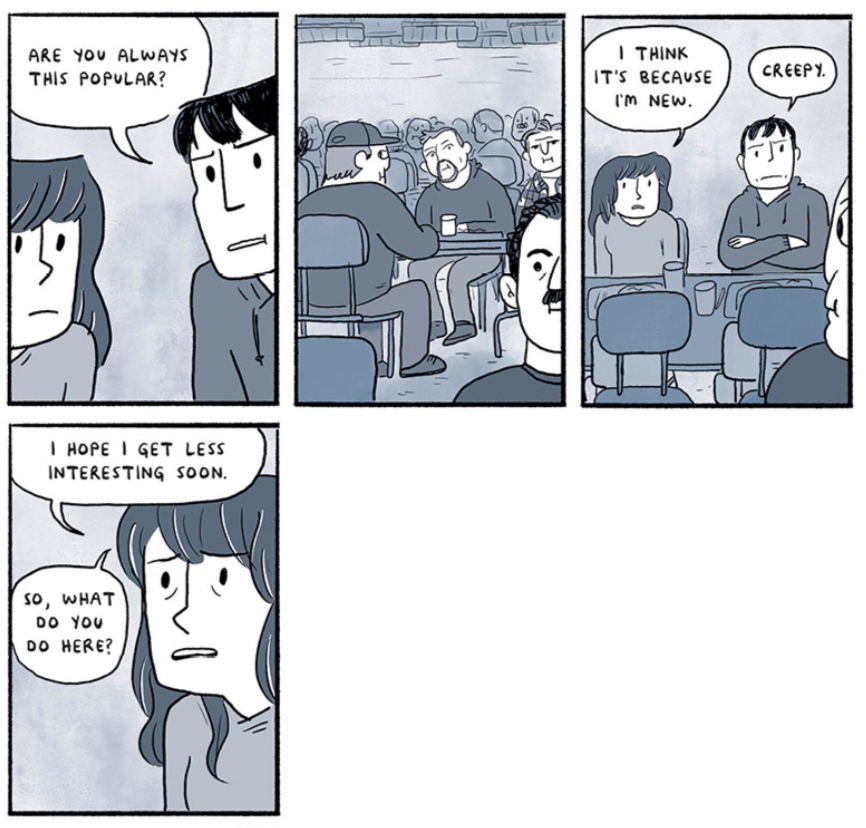
Being one of the few women working in the oil sands, Beaton was subject to the attention of men who had nothing better to do than to harass her. They insinuate that she was sleeping around with married men twice her age or that she was working also as a prostitute. Beaton, having had enough of working at the oil sands, quits her job. At the final meeting, she explodes with everything that she’d been pushing down and keeping to herself for the past two years. She’s fed up with the “Harassment, with your joke of a policy against it” (Beaton 415). Her boss asks why she didn’t tell him about it. But she did tell someone before, and they did absolutely nothing to change it. Women who told someone would be subjected to the anger of the rest of the crew, being the one blamed for him being fired instead of what he did. That would further bring more unwanted attention onto Beaton, making her troublesome job even more so. Her speaking up but not getting the problem solved made her less open to sharing her issues with the company.
Beaton paints her autobiographical comic in a monochrome grey tone, further emphasizing her experiences and struggles working in the oil sands as a woman. The dreary grey represents how she saw the world, one lacking colour and life. Other than the workers, the only source of contact are the managers and the higher-ups. In a man’s world, one could only imagine the loneliness and helplessness that she felt there.
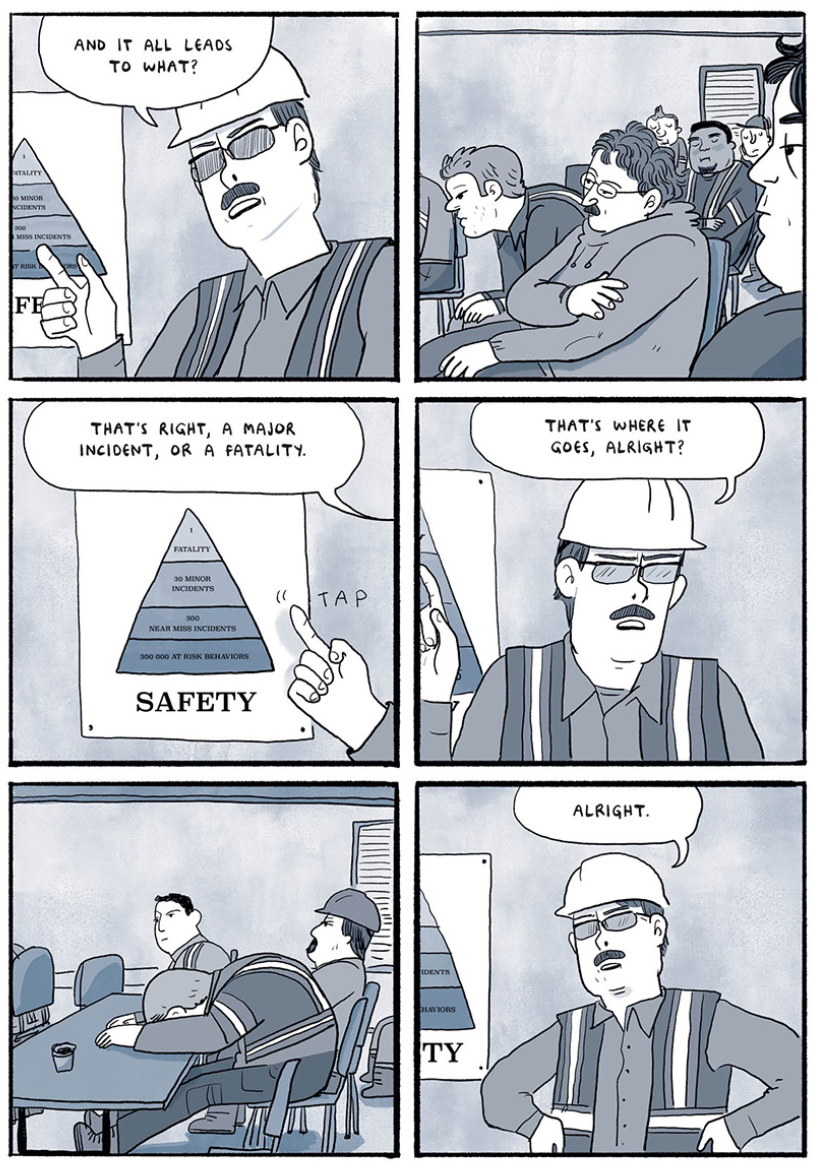
But why did the company not do anything? The answer is greed. They just want the money that comes from the labour of the workers. Due to the labour surplus where everyone is trying to work in oil, everyone is easily replaceable. So they don’t care about people’s wishes and treatment here, because if they get upset or hurt, someone’s already waiting at the front door to take their place. Another way we see this portrayed is through the “safety meetings.” The safety equipment, like vests and hard hats, are not things that the company wants to invest in, as it takes money away from the profit. “I don’t know how this company can spend so much and also be so cheap?” (Beaton 311). Only when the “big shots” are coming do they provide these, to make it seem as though they are following the regulations and putting their workers first. Right after the officials leave, the equipment gets taken away as well. “The almighty dollar comes first. That’s pretty sad. You can’t eat money” (Beaton 361). Their greed transcends beyond the workplace, harming the community and environment in the surrounding areas.
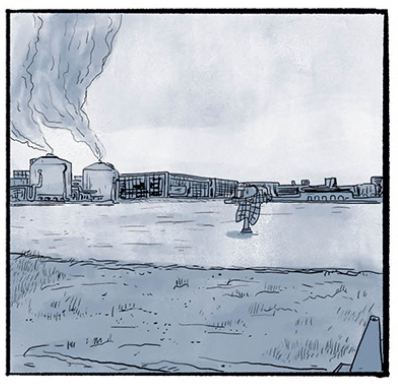
The title of the comic comes from the hundreds of ducks that died in the tailing ponds created from the wastes of oil extraction. The company attempts to use scarecrows to warn the ducks to steer clear of the tailings ponds. Such tactics were used by companies, ones that obviously would not work, to make it seem like they actually care for the safety of the ducks. People chose to work in the oil for the money to support their families and to pay off their student loans. “I don’t get paid for the big ideas. I does what the man says” (Beaton 346). But companies have earned beyond what they need, yet they choose not to invest in safer and cleaner ways of oil extraction. This not only poses the short-term effects mentioned earlier, but also ones that develop in the long-term. The steam-blasting method of extracting oil pollutes the local water sources that people living in the area need to survive. Studies found cancer occurring in younger patients, possibly due to consuming that polluted water (Beaton 360). The companies know this because it’s all over the news, but as long as they pretend that they’re trying to help, they can cover these stories up. Companies with that much power will not stop at anything or for anything until there is quite literally nothing left.Conclusion
Oil has done nothing but exist. But the companies who have taken it as their own resource drastic wealth have crafted an evil persona onto oil. Rather than blaming the oil, the true villains in this story are the corporations and their greed. Although Beaton’s work is a memoir of her own journey, the ideas and themes that she brings to light are relevant and relatable topics to many. Through her sharing her experience, we get to see from a perspective that is often silenced and ignored.Bibliography
Beaton, Kate. DUCKS: Two Years in the Oil Sands. Drawn and Quarterly, 2022.Drawn & Quarterly. “At Home With Kate Beaton (DUCKS).” YouTube, 13 Sept. 2022, www.youtube.com/watch?v=E6JdRwpLABg.
5of7. KateBeatonJune2011. 19 June 2011. Wikimedia Commons. Accessed 2024.
“Ducks: Two Years in the Oil Sands.” Wikipedia, Wikimedia Foundation, 25 July 2024, en.wikipedia.org/wiki/Ducks:_Two_Years_in_the_Oil_Sands.