A MOUNTAIN OF DAMAGED OIL DRUMS NEAR THE EXXON REFINERY
1 2022-08-01T14:11:56+00:00 Sarabjit Dhillon e0fe72219a03b8b37bb7b477c3bafff7932c0822 1 2 Baton Rouge (La.), December 1972 plain 2022-08-01T14:13:40+00:00 Sarabjit Dhillon e0fe72219a03b8b37bb7b477c3bafff7932c0822This page is referenced by:
-
1
media/Mine_Vergara.jpg
2022-07-31T14:09:40+00:00
"Oil" (Alexei Parshchikov)
65
translated by Wayne Chambliss
image_header
2024-08-05T15:54:27+00:00
Background
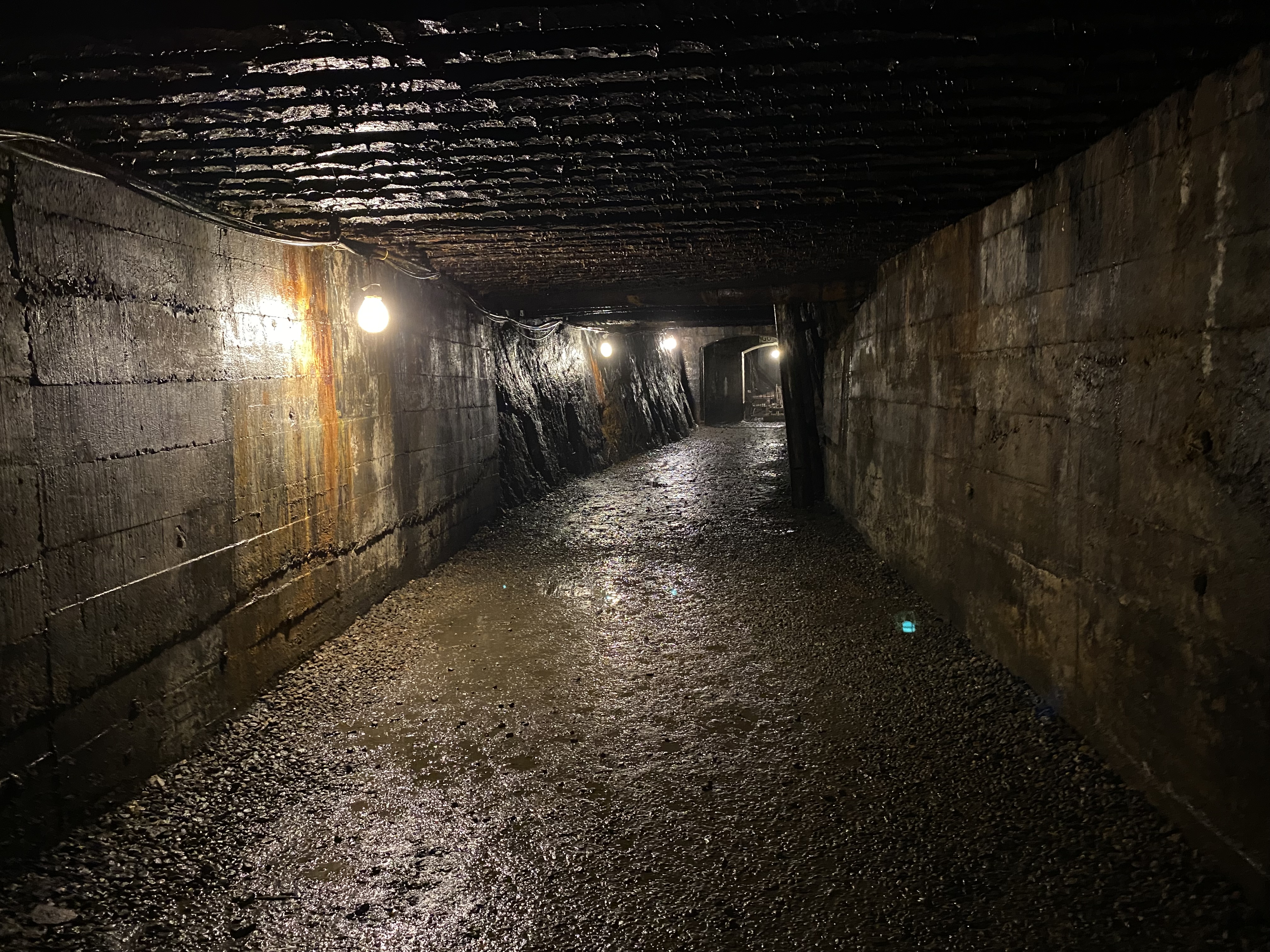
“Oil” by Alexei Parshchikov (1953-2009) is a poem published in English translation by Wayne Chambliss by The Cafe Review in 2021. It details the difficulty and challenges workers in the fossil fuel industry face, both through finding work in these companies and in extracting these resources from the earth, which is pictured as a living and feeling organism. Parshchikov was born in Vladivostok, Russia, preceding his move to Ukraine, where he was raised. He attended the Kiev Academy of Agriculture, the Moscow Institute of Literature, and Stanford University where he received his MA. Along with being at the forefront of the Metamorphism movement, also known as the “Meta-realism” movement, his writings and particularly this poem address the dangers that are present in mining with respect to daily work practices. "Oil” details the usage of explosives and other safety hazards, the damage that mining and drilling create, and also the mortality of the mind, spirit, and body.
Analysis
The poem begins with the mention of a “Jackal and a crow” (Parshchikov) which can seemingly be Big Oil and a laborer. The laborer finds themself hiding from “the dynamite, nearby, [which] is armed” (Parshchikov). The description of needing a dynamite explosion is startling in its danger and a demonstration of crude desensitization that the fossil fuel extraction work creates in the workers. The worker must hide “When rain falls” (Parshchikov) because as the explosion goes off, cave materials that the workplace contains fly everywhere; this demonstrates the daily and commonplace hazards of the occupation. Even today, mining and drilling work continues to “face a numbing daily litany of terrible…accidents, most so routine they are difficult to tell apart…this inherent danger…induces a fatalism, and…Miners are expected to accept that dying at work is part of the job” (Special Report). Workers who are a part of these resource extraction plans not only have to accept that mining and drilling are jobs that come with the common risk of mortality but also have to constantly put themselves in positions that can cause this mortality, as seen with the latter action taken to induce more space for resource extraction.
The poem continues to describe the coal mining corporation beating the laborer down with these inhumane working conditions, with “the crow ha[ving] been pecked by the jackal” (Parshchikov). As coal is a finite and nonrenewable resource, the poem also details how workers and industry personnel need to look for other means of extraction of different materials in the oil industry. As the audience is introduced to the worker finding a new occupation in the oil industry, it finds that this is after travels through “the Valley of Transit” (Parshchikov). Comparable to “An Athabasca Story” by Warren Cariou, the oil industry is described in a defamiliarizing perspective, especially with the naming of the oil drilling machines as monstrous “gladiators” (Parshchikov). Both texts share a sense of unfamiliarity with respect to the oil drilling machines and the industry practices. To continue setting the scene of injustice, Parshchikov details the laborer as continuing to be berated by the cooperation owner as they are “chasing each other’s tails” in the poem. Through the transcendence of one resource extraction type to the other, the trend of industry exploitation is prevalent.The dangers in these two occupations is evident when “a god descends out of orbit, snatching men from the earth, into the truck, never again to be found.” Between gas explorations, mine collapses, and flooding, there are not enough safety conditions put into place to ensure that miners would be able to come back to their families every night, particularly in the older times of mining and in illegal mines “with no emergency service at hand, medical assistance, or protocol for dealing with accidents” (Special Report). Work in the mine and oil field also influences the ways in which laborers live outside of their work, and there may be ways that miners need to cope with the experience of their work as with the presence of “what’s left of [alcoholic] bottle” and some workers “will squirm in hot pitch, hang themselves in a year” while “Others will live as nomads” (Parshchikov). As with the dangers that are presented to miners and drillers within their workplace, Parshchikov demonstrates that the effects of working in these environments includes constant fear and a need to quell this through alcohol and other coping mechanisms.
In all, “Oil” demonstrates the pervasiveness of the big oil and coal companies within culture and society, the environment, and in the lives of the workers in these companies. It shows the traditionalism of this expenditure with respect to technology and safety changes throughout the years as well as the effects that mining and drilling have on individual workers inside and outside of their life at their occupation.
“Alexei Parshchikov.” Words Without Borders, https://wordswithoutborders.org/contributors/view/alexei-parshchikov/.
“An Athabasca Story.” Cpb-Us-e1.Wpmucdn.com, Apr. 2015.
Cariou, Warren, and Dominic Boyer. “An Athabasca Story.” Energy Humanities An Anthology, edited by Imre Szeman, John Hopkins University Press, 2017, pp. 515–519.
calgaryherald. “May 14, 1914 - Dingman Discovery No.1 Blows in Turner Valley.” May 14, 1914 - Dingman Discovery No.1 Blows in Turner Valley, 15 May 2015, https://calgaryherald.com/news/local-news/may-14-1914-dingman-discovery-no-1-blows-in-turner-valley/.
Kbenedict. “From Oil.” The Cafe Review, 12 Jan. 2021, https://www.thecafereview.com/winter-2021-poetry-from-oil/.“Special Report: Why Is Mining Still so Dangerous?” IndustriALL, 21 May 2019, https://www.industriall-union.org/special-report-why-is-mining-still-so-dangerous.
Szeman, Imre, and Dominic Boyer. “An Athabasca Story.” Energy Humanities: An Anthology, Johns Hopkins University Press, Baltimore, 2017, pp. 515–519.
Warren Cariou, http://www.warrencariou.com/.
Uncoveringpa. “Touring the Number 9 Coal Mine: The World's Longest-Operating Coal Mine.” Uncovering PA, 12 May 2022, https://uncoveringpa.com/number-9-coal-mine.