Energy AfterlivesMain MenuIntroductionAboutCoalOilNuclearTextual AfterlivesMusical AfterlivesPlanned and unplanned musical responses to coal, oil, nuclearPhysicalizations and VisualizationsLinks to all our project pagesInterviewsA collection of interviews with writers conducted by Energy Afterlives students.Feedback
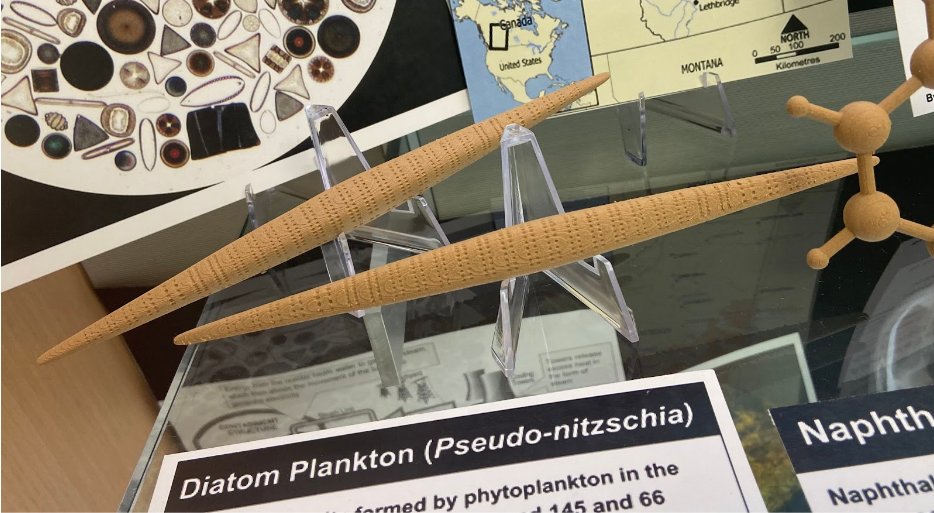
3-D Printed Models of Psuedo-Nitzschia Diatom
1media/Screenshot (5)_thumb.png2022-08-05T19:29:42+00:00Gabriela Przybylskif4977b0db0cb351322739ada725a5d2516e52dc8113-D models of diatoms from the Genus Pseudo-Nitzschia. Printed for display case. Model used was produced with funding from the US National Science Foundation for educational purposes.plain2022-08-05T19:29:42+00:00Gabriela Przybylskif4977b0db0cb351322739ada725a5d2516e52dc8
This page is referenced by:
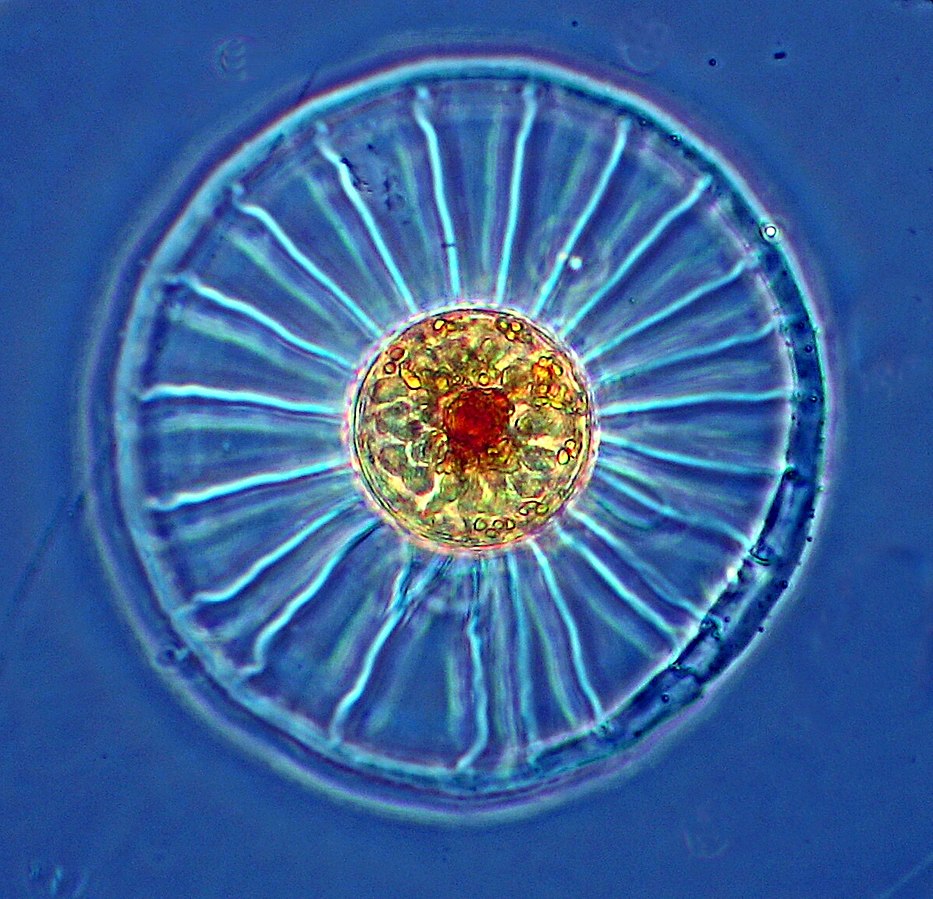
1media/Diatom2 (1).jpgmedia/Diatom2 (1).jpg2022-08-01T18:28:10+00:00Biological Origins of Oil: Phytoplankton20image_header2022-08-05T19:31:30+00:00Just like coal is produced from the remains of carboniferous era plants, oil comes from the remains of phytoplankton that lived in the waters of the cretaceous period. Many of these phytoplankton were Diatoms.
Diatoms were (and are) single celled algae that live in several environments around the world. What sets diatoms apart from other phytoplankton are their skeletons. These creatures build for themselves hard glass skeletons comprised of silicates (SiO2).
When these Diatoms and other phytoplankton die in shallow oceans, their remains are in proper anoxic conditions for the oil forming process to take place. Their silicate skeletons, however, are not broken down through the process in the same way as other remains, as they lack Carbon atoms.
Bibliography: Spaulding et al. 2021. Diatoms.org: supporting taxonomists, connecting communities. Diatom Research 36(4): 291-304. doi:10.1080/0269249X.2021.2006790