Background
Northeastern Pennsylvania contains one of the United States’ prominent anthracite coal deposits. First discovered in the 18th century, coal began to be exported out of the area by the 1820s. Coal mining played an integral part in the industrial revolution, and major reliance on the resource is still the main cause of concern with respect to coal mining working conditions, its effects on global warming, and ocean acidification.
Coal’s journey of creation starts with the beginnings of modern day continents called cratons, which formed during the archean age. Cratons expanded to take the shape and structure of what we see of our continents today. Before this however, they were a part of the Rodinia supercontinent. Before tectonic processes, Grenville, which was part of the craton that houses the modern day east coast of the US, was subjected to collisions and deformation over a period of a million years, and it became the basement (bottom most layer) of the modern day east coast.
Rodinia then broke away from the rest of the supercontinent towards the end of the Proterozoic, and the Iapetus sea opened between Laurencia and Gondwana. In this time, the first integral component that led to the formation of coal in the Appalachian mountains occurred. The Paleozoic saw volcanic arch collisions that led to an inland basin on the US east coast which, importantly, was the site of the deposition of different inland sea sediments that came into the basin. These different sediments formed distinct layers in the basin, and one of these layers was that of coal, between the other ones.
The second integral piece to the creation of anthracite coal in the Appalachians occurred following the deposition of the sea sediments and coal, this being the collision of Gondwana with Laurencia. The modern day east coast of the United States collided with Gondwana, pushing the inland basin filled with sediments into anticlines and synclines of mountains. The intense deformation of this area led to the coal between the sediment layers to feel heat and pressure, transforming it into anthracite grade coal whereas less deformed areas nearby progressed and stayed in bituminous coal form.
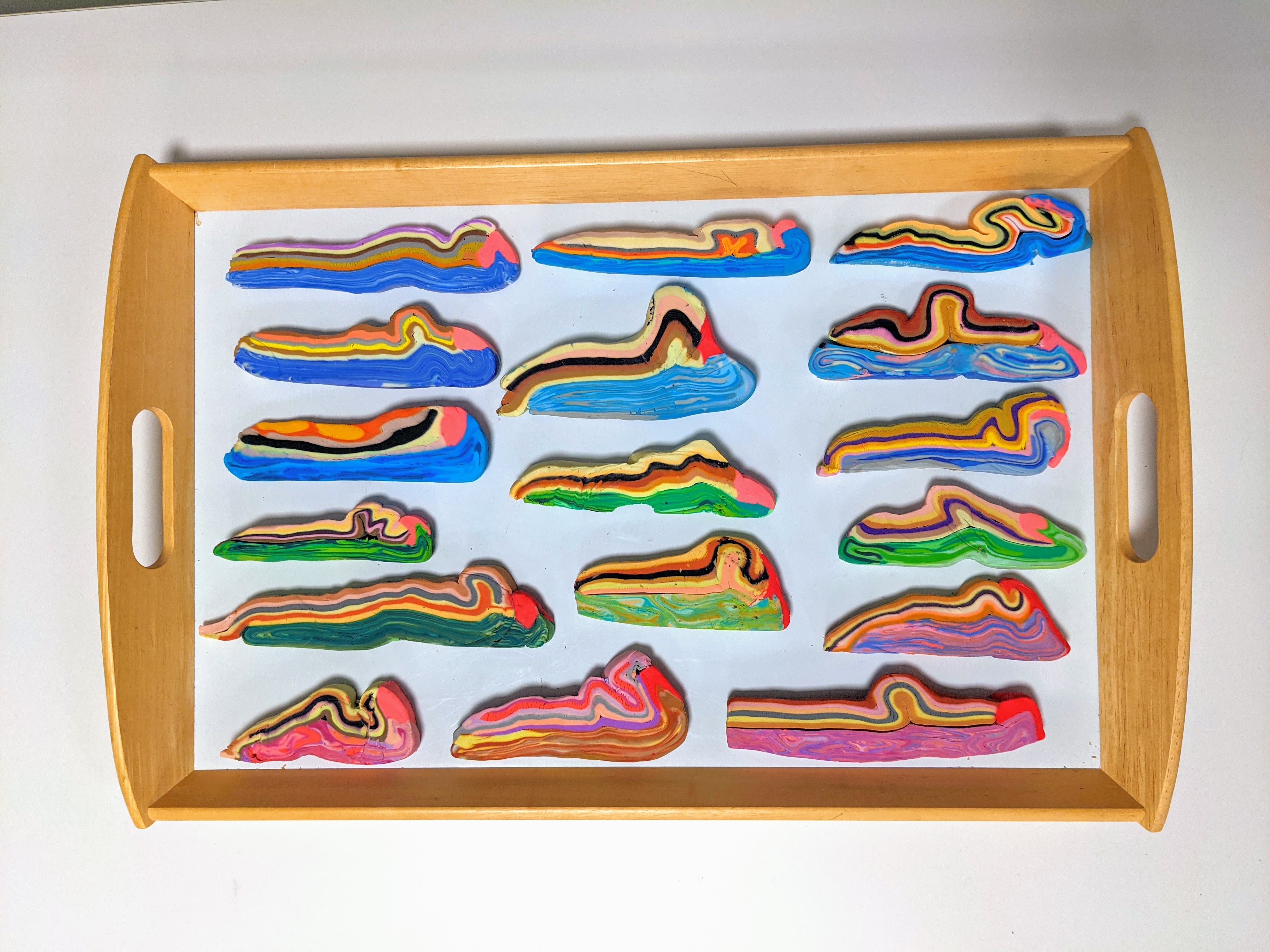
Clay Exercise To Demonstrate Process
Materials:
1 bag of earth-colored packets of clay (10 in total)
1 bag of contrasting clays color packets (10 in total)
2 packets of clay colored to look like coal (gray or black)
1 packet of clay (red or pink) to show the volcanic arc
Process:
-Take the bag of earth-colored packets of clay and create marbling in order to begin making the basement rock layer of the structure.
-Shape the marbled piece of clay into a rectangle
-Take the red or pink volcanic arch clay and push it into one of the sides of the basement layer.
-On the rest of the flat side of the basement layer, roll out the contrasting clay packets and put them in layers on top of each other, taking care to place the coal layer between the other ones.
-Use a hand to stabilize one side of the Appalachian Plateau and the other to push it inwards. Folding will occur to accommodate the pressure (Selby Hearth).
Bibliography
“Library Guides: Anthracite Coal Mining Region of Northeastern Pennsylvania: Home.” Home - Anthracite Coal Mining Region of Northeastern Pennsylvania - Library Guides at Penn State University, https://guides.libraries.psu.edu/anthracite.
Hearth, Selby. “Slides for Day 03: AppaCLAYchians.”