Coal Mining Explosion
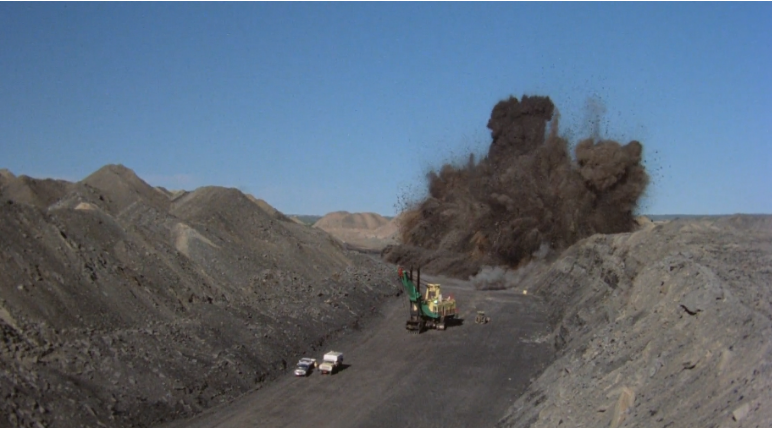
1 media/Boom_thumb.png 2022-08-05T19:41:29+00:00 Leila Byerly 2000a39653f4747f52ea5c65f800e896ead2c01f 1 1 An image that appears in the film of the ground blowing up, spewing black powder plain 2022-08-05T19:41:29+00:00 Leila Byerly 2000a39653f4747f52ea5c65f800e896ead2c01fThis page is referenced by:
-
1
media/KoyaaTitle.png
media/Mine_Vergara.jpg
media/KoyaaTitle.png
2022-08-05T18:24:33+00:00
Koyaanisqatsi
28
image_header
2022-08-08T01:22:16+00:00
Summary:
Koyaanisqatsi is an “experimental documentary” directed and produced by Godfrey Reggio (born 1940) with a score written by composer Philip Glass (born 1937). The film, released in 1982, contains no dialogue or narration and consists of symbolic visuals set to music. No characters, spoken words, or story are present. Highly conceptual, it has no plot and relies on images and cinematography coupled with the score to set the tone. The opening scene is backed by an eerie, minimal keyboard track, and a chant of the title as the camera zooms out on cave drawings, then an explosion, and a fade to machinery and an oil rig breaking down.
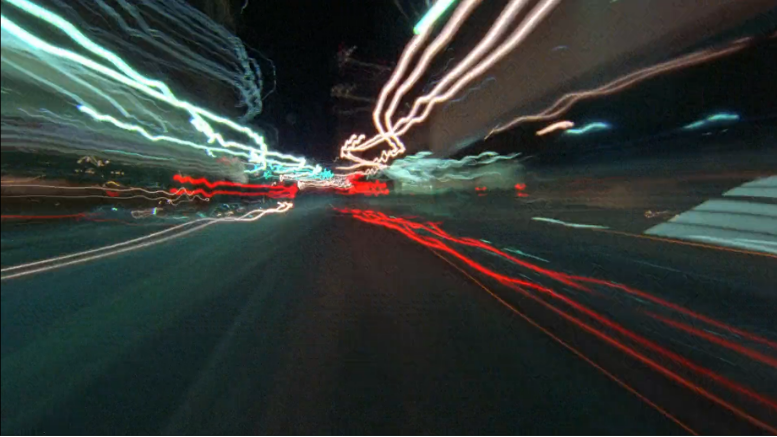
What follows are slow, panning shots of rock formations and other nature scenes of mountains, the ocean, and clouds. After the nature scenes the rest of the film consists of bustling shots of humans or human inventions — absent of nature. Footage is either sped up or slowed down as people dart to and fro, operate machines, or buildings get destroyed. Disconnected, seeming unrelated images follow each other without context until the film ends on the same chanting of the title from the opening as a rocket silently explodes and flaming debris falls to earth in an extended shot. Somber organ music plays as the camera zooms until the final image of the same cave drawings from the beginning.
Humans as destroyers:
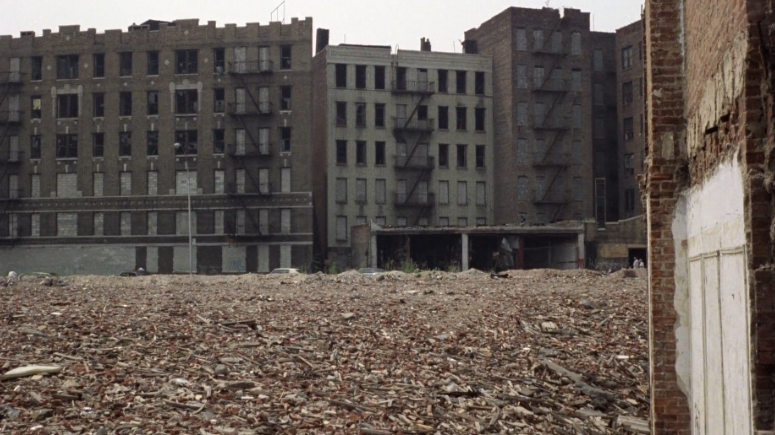
From the opening shots the film sets an unsettling tone. The score at the outset consists of singular instruments playing individual repeated notes or phrases in isolation which contributes to a feeling of disconnection of man in his isolation and loneliness. After scenes of nature or a tranquil beach, shots of power plants are jarring, producing disgust at man-made structures. The film is rife with explosions — moments of sudden extreme destruction. The demolition of various structures unveils the futility and pointlessness of the disturbances men cause. Commercials flash past on a TV screen and the camera rushes through a supermarket at a dizzying pace overwhelming the viewer with the nauseating sense that they are constantly being bombarded with empty nonsense. The effect is one of hopelessness in the face of the irreversible damage of our busy lifestyles. The juxtaposition of a machine stuffing sausage meat into casings swiftly followed by a similarly structured shot of people running up elevators draws a parallel between human behavior and being parts of a machine. As we become more reliant on technology, we become part of it. Ending on the same shots from the opening symbolizes the cyclical, unending pattern humanity has trapped itself in. Our need for energy and consumption runs rampant to the point that we permanently harm surrounding beauty and cannot undo the negative repercussions of our pursuit of power.
Humans as Beautiful:
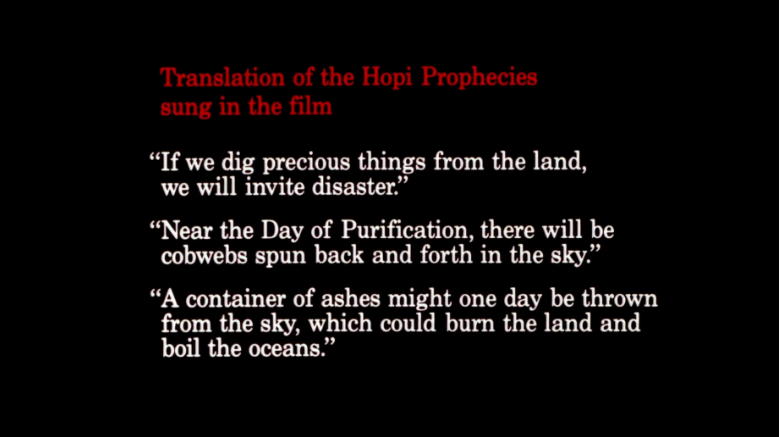
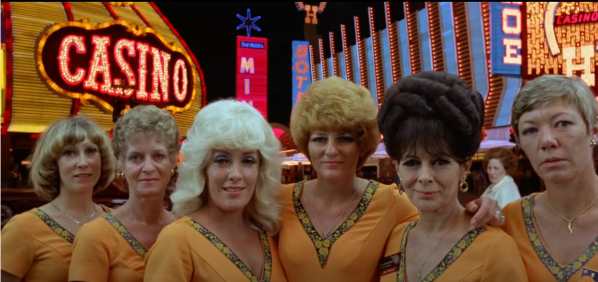
It is tempting to read the movie as having a purely environmentalist message. The Hopi prophecy about digging inviting disaster seems to send a clear message against mining, and the title presents humans as unbalanced against nature. However, Reggio himself left the meaning up to interpretation, having preferred to leave the film without a title, saying “for some people, it’s an environmental film. For some, it’s an ode to technology. [...] It depends on who you ask” (Youtube). Indeed, in his 1983 review, Roger Ebert wrote that the images presented “exemplify humankind’s ability to overcome incredible challenges” (Ebert). The focus on human experiences demonstrates that there is some beauty in humanity. We aren’t always deliberately causing destruction, sometimes we just need to get where we need to go and that is an uncomfortable side-effect. Lingering shots of people’s faces show some reverence for individual lives, goals, and aspirations such that there is also empathy for humans. We are not merely mindless destroyers, we are fathers playing with our children at an arcade, elderly women smoking and laughing together, mothers looking through rubble for lost belongings. Human lives are also beautiful and worthy of respect despite our overall destructive tendencies. The barren wastelands devoid of humans are just as unsettling as the coal plants, and the sprawling cities are just as majestic as the mountains. The message is not that humans are entirely evil and nature entirely good, but rather that they are out of balance.
Unbalanced:
Whether you interpret the message as pro-nature and anti-technology or as an ode to mankind, there’s no mistaking that technology is an integral part of our lives and our relationship with nature. While the take-home message is left open-ended, the viewer is left with a fresh perspective on how our lives are entwined with nature and others. Technology is an unavoidable part of life and can play a part in our advancement and our destruction. The lack of spoken language transcends human barriers and provides a closer connection to the images and to nature as feelings that stand on their own without interpretation. Human activities such as coal mining unavoidably cause harm, but energy also allows us to improve our quality of life and take care of each other. It may be too late to right our wrongs, but we can push on, striving to protect that which we know is good, and improve the world for the future however we can.
Bibliography:Ebert, Roger. “Koyaanisqatsi Movie Review and Film Summary (1983) | Roger Ebert.” 2022. www.rogerebert.com/reviews/koyaanisqatsi-1983. Accessed 1 Aug. 2022.
“KOYAANISQATSI - Godfrey Reggio - Making off (Français).” YouTube, uploaded by Foleor, 4 Jan. 2011, www.youtube.com/watch?v=_Mr26_m5rGQ.