Energy AfterlivesMain MenuIntroductionAboutCoalOilNuclearTextual AfterlivesMusical AfterlivesPlanned and unplanned musical responses to coal, oil, nuclearPhysicalizations and VisualizationsLinks to all our project pagesInterviewsA collection of interviews with writers conducted by Energy Afterlives students.Feedback
First draft graph
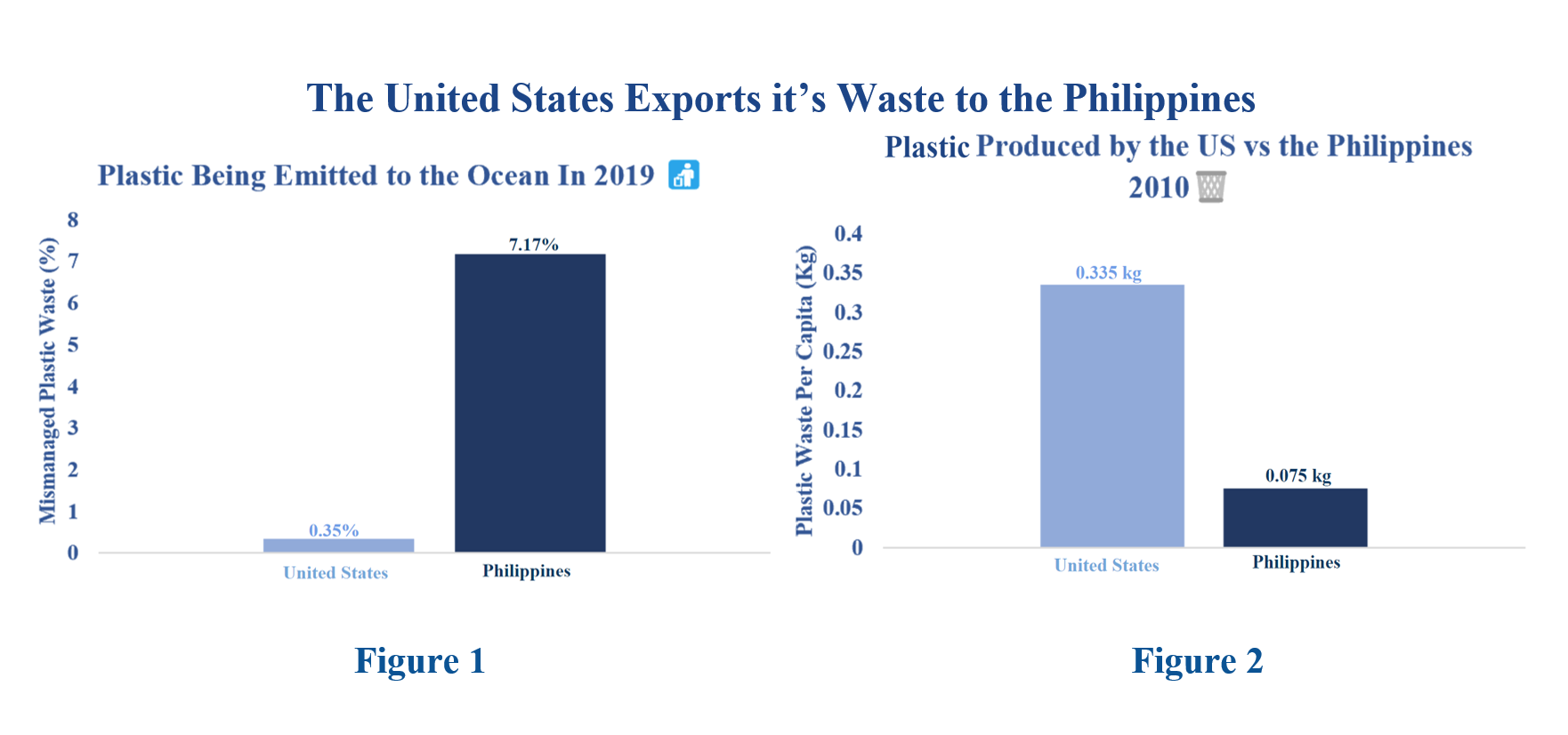
1media/AAA Graph_thumb.png2023-12-21T15:10:11+00:00Maya Hicks15fb6f70b1bb7c03018f3adda024367fbb1c63e311The United States exports plastic to countries like the Philippines because it’s typically cheaper to export waste rather than develop local recycling infrastructures. According to TIME magazine, it is hard for the Philippines to manage the amount of waste imported from the US, this heightens the risk of mismanaged waste in the Philippines—source: Our World Data & TIME Magazine.plain2023-12-21T15:10:11+00:00Maya Hicks15fb6f70b1bb7c03018f3adda024367fbb1c63e3
This page is referenced by:
1media/PLASTIC BOTS.jpgmedia/AAA Plastic Banner.jpg2023-12-21T15:03:30+00:00The U.S., Philippines, and the Global Garbage Trade26image_header2024-01-09T17:15:30+00:00The Project This data visualization consists of a collage, representing the ocean, and a bar graph representing the production and mismanagement of waste by the Philippines and America. The lefthand side of the graph depicts plastic being emitted into the ocean by the United States versus the Philippines. The right side of the graph depicts how much waste the United States produces compared to the Philippines. The Philippines produces less plastic yet mismanages more than The United States. This disparity in waste mismanagement and production by the Philippines is due to the United States exporting most of its plastic to the Philippines. The U.S. inundates countries like the Philippines with waste for cheap labor. The good news is the Philippines has made efforts to ban the importation of waste. In an article, Philippines Slams the Door on World’s Plastic Waste, the president was quoted saying, “We are not the world's dump site”. Source(s): Our World Data & NIKKEI Asia The idea for my final project originated from a petroleum data exercise we did earlier in the semester, here’s the original graph I made: Photos of the Process: