Energy AfterlivesMain MenuIntroductionAboutCoalOilNuclearTextual AfterlivesMusical AfterlivesPlanned and unplanned musical responses to coal, oil, nuclearPhysicalizations and VisualizationsLinks to all our project pagesInterviewsA collection of interviews with writers conducted by Energy Afterlives students.Feedback
pH Map
1media/Screen Shot 2022-08-01 at 2.51.20 PM_thumb.png2022-08-01T18:56:55+00:00Suli Kamholtz-Roberts76fc866e501f3a450d8f28e24bb6fbac4719aec412Findings at Silver Creek and AMD siteplain2022-08-01T18:57:15+00:00Suli Kamholtz-Roberts76fc866e501f3a450d8f28e24bb6fbac4719aec4
This page is referenced by:
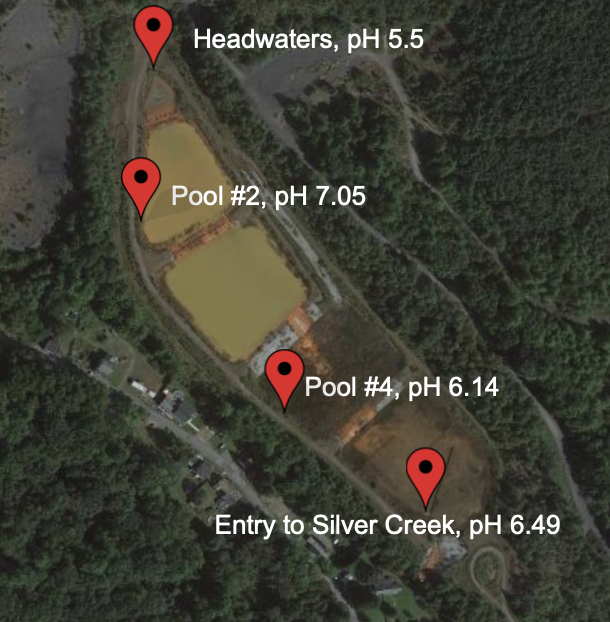
1media/DSC_5085.JPG2022-08-01T18:45:27+00:00pH Map7Findings from the Acid Mine Drainage siteplain2022-08-04T13:27:38+00:00The Acid Mine Drainage site was set up to remediate the acidity and heavy metals in the water. The site has five pools between the mine drainage pipe and Silver Creek. These pools contain limestone, which can interact with the water and reduce the acidity. The pools also contain plants that can extract heavy metals from the water, making it less dangerous. Our hypothesis that the water going through the filtration pools would become more neutral as the limestone reduced the acidity of the water was somewhat accurate. Our water samples from the pools were taken in still water, and our pH readings varied. The second pool had a large pH range, and we concluded that because we weren't taking our samples from running water, there were differences in the pH being observed. Still water means the water is not being mixed and therefore doesn't have a consistent pH. The pH could also be affected by the bio-matter and algae under the water. Some ponds seemed to be more neutral while others seemed more acidic. It could be that the limestone in some pools had already been armored and could no longer extract iron from the water. Overall, there was a general trend in data that the remediation site worked to neutralize the water from the coal mine.