Sheeta
1 media/Screenshot 2024-08-01 at 1.07.59 PM_thumb.png 2024-08-03T04:03:20+00:00 Alyssa Ya bc18bcb4be276850d92bf7febaa9155c774e0074 1 2 Sheeta plain 2024-08-03T04:05:35+00:00 Castle in the Sky August 2, 1986 Studio Ghibli Japan Alyssa Ya bc18bcb4be276850d92bf7febaa9155c774e0074This page is referenced by:
-
1
media/Screenshot 2024-08-03 at 12.33.58 AM.png
2024-07-22T02:21:43+00:00
Castle in the Sky
22
written and directed by Hayao Miyazaki, produced by Tokuma Shoten
plain
2024-08-03T15:26:21+00:00
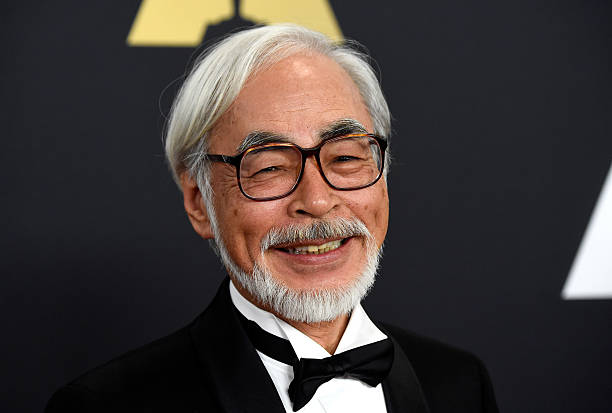
Castle in the Sky was written and directed by Hayao Miyazaki (born January 5, 1941, in Tokyo, Japan) and produced by Tokuma Shoten (a company established in 1954 by Yasuyoshi Tokuma in Minato, Tokyo). Castle in the Sky was released on August 2, 1986, as Studio Ghibli’s debut film (Ghibli Wiki).
Castle in the Sky opens the story with Pazu and Sheeta, our protagonists. It is an ordinary working day for Pazu in the mines until he discovers a falling figure from the sky. Upon saving this mysterious girl, she introduces herself as Sheeta. These children come from a similar background as orphans who aspire to discover something bigger than themselves. Laputa, a castle in the sky, brings them closer together as the legend connects their family’s histories. Sheeta possesses a crystal necklace—a family treasure passed down for generations. Until the crystal’s glow caught the unwanted eyes of villainous forces, it would not have been revealed that the crystal was the key to unlocking Laputa’s secrets. Alongside Pazu and Sheeta’s determination to uncover the truths about Laputa are the antagonists with different plans in mind for Laputa. Muska, a relentless military colonel chooses to yield his knowledge of Laputa stubbornly for his own benefit. Muska is the main villain in Castle in the Sky through his irredeemable qualities in seeking ownership of the destruction Laputa has the potential to unleash. Dola is the leader of the sky pirates whose scheme for Laputa is to loot it of its treasure (shocker...). Dola develops out of this typical pirate archetype and becomes more dependable and caring as she spends more time with our protagonists. Pazu and Sheeta are thrown into an adventure of a lifetime alongside the antagonists. Laputa’s fate will be determined by whom this crystal falls into the hands of.
Castle in the Sky intersects coal and nuclear energy in this fantastical world forged by mining towns and agriculture. But how can humanity succeed in existing if not for the wars fought to grasp at the next promise of more? Laputa resides among the clouds far away from the rest of humanity. It is not until the legends of this floating castle shift from rumor to reality that Laputa’s existence becomes a more pressing matter. A brewing desire to seize Laputa’s riches—both its treasures and secrets—awakens throughout the land. The race to Laputa encapsulates the polarizing sides of human want. Human’s lust for power and control of this phenomenon will only lead to a path with destruction in its wake. Others’ ideals lie in peace as they seek harmony in the coexistence of the natural entities that live alongside them.
Coal energy lies as the backbone of Castle in the Sky’s world. Although not explicitly depicted in the film, it is very present in the beginning where themes and direction are told. Castle in the Sky’s ground-earth is entirely steampunk. “Steampunk is a fantasy genre that’s defined by a focus on the style of industrial era mashed up against futuristic technology” (Heckmann). Tons of fictional machinery such as the aircrafts and advanced coal machines easily contrast with the more industrial-aged details of the movie. An example of this is by Pazu’s observation that automobiles are “rare." The only scene a car appears in is when the pirates are on the hunt for Sheeta. Civilians’ normal mode of transportation is simply walking because their town already has everything their daily lives need. This is emphasized by how squished together the homes and businesses are and how empty the rest of the world is. Mark Nowak's experiment poetry project Coal Mountain Elementary shows that mining towns are isolated and run by those who discover and capitalize on the coal (Nowak). This mining town is also the place where the direction the rest of the film is set. In a particular scene where Pazu retrieves miners from the elevator levels below is an inspector valuing the “rocks." The inspector peers closely at these rocks and is disappointed by the miners’ finds: "No silver, no tin even…all that wasted work.” Coal is merely called “rocks,” because everyone is acclimated to their reliance on coal as an energy resource. Since the beginning of the movie, coal is devalued through its name. Castle in the Sky captures the midst of the transition where humans are looking for a higher power—Laputa, where this potential of “nuclear energy” lies.
Laputa acts as a physical form for nuclear energy potential. It is a castle in the sky, hence the title of the film. Laputa’s only remembrance of humans were the inhabitants that voluntarily abandoned the island an unknown period of time ago. Laputa is among the clouds far away from humanity itself until we encounter Sheeta and her crystal. This crystal is heavily sought after by the pirates and Muska (the military) because the crystal provides the location of Laputa in which what they desire lies. Despite the evil and greed revolving around Laputa, it is a beautiful island, filled with luscious greens, deep blue waters, and otherworldly creatures. The gap that separates ground-earth and Laputa is the sky itself. What easily bridges these two areas are the colossal aircraft that are more prevalent in the movie than ground transportation (trains, cars, etc.). This steampunk aircraft technology bases its sources on both wind and coal energy. Again, this strays a bit more away from its use of coal energy entirely as it inches closer to Laputa. This journey to reach Laputa is still not an easy one. Laputa is protected by the “Dragon’s Lair” a blanket of angry clouds and storms with animalistic features. The lightning takes the shape of a dragon, flashing across the sky as a serpent would and lashing out at the intruders of its “lair." This area is a testament to those who want to reach Laputa. Pazu and Sheeta are a flight in a glider, fighting against the harsh wind to prove their determination to land on the island. They do eventually crash onto the island, passing this test, amongst bountiful greenery and flowers. The two children rejoice in a moment together, finally able to say Laputa is real. Yet some can overcome nature in their nod to technology as a servant to their human desires. Muska and the military penetrate through the storm, just ahead of Pazu and Sheeta’s arrival in their goal to steal Laputa’s glory. Technology once again aids Muska as he seizes control over Laputa and transforms this “nuclear energy” into “nuclear power” as a means to conquer and destroy.
While nuclear energy is a growing green energy source, it has also been corrupted to serve as an agent of destruction. Laputa wields secrets that makes it dangerous to those with wrong intentions. Before Laputa was affected by outer human influence, guardian robots carried out their duties as protectors of the island to maintain peace within its nature. Upon Pazu and Sheeta’s arrival in Laputa, they unknowingly land on a bird’s nest. A guardian robot approaches them to remove the glider safely. This guardian robot is the remaining “living” one, as the rest have succumbed to the island’s natural growth. By the more “natural” design of the robot (moss growing on its armor, animal’s carefree familiarity with the robot), it induces a sense of peace and calm. Unfortunately, Pazu and Sheeta are not the only visitors on Laputa at that moment which gives Muska the opportunity to take control over Laputa. Muska is a clear representation of how power can manipulate nature into a more monstrous being. Throughout the movie, Muska falls deeper into a manic state as he edges closer to Laputa. An example of this could be his treatment towards Sheeta from the beginning to end of the movie. Despite his antagonistic goals, in the beginning, Muska attempts to reason with Sheeta for information on Laputa. He tries to bribe her with gifts—new dresses and shoes—and comfort—her “prison” being a spacious bedroom with fancy linens. Fast forward to when Muska is in control of Laputa, he captures Sheeta in her attempt to distract Muska from Pazu’s hiding place. Muska pulls her by the hair and threatens her with a gun if she does anything outside of his orders. Laputa is molded to Muska’s will as he reawakens the technology within the island. Lying in wait are hibernate guardian robots that are deployed from inner parts of the island. These are specifically robots built for destruction. They have the ability to shoot lasers, menacingly crawls and towers over the humans, and can grow wings for flight. Reds and oranges are often used in scenes where chaos and annihilation ensues. When Muska first shoots a blast of energy into the water, an ominous explosion grows and eerily stands against Laputa. This image alone creates a shock-inducing realization as Laputa turns from a calm, safe haven into a weapon of destruction.
Castle in the Sky reveals how normalized nuclear energy is to appear as a thing of power and control over its natural beauty and otherwise green use. The characters are more black-and-white, in this case, to correctly portray how society views nuclear energy now. Nuclear power has been mass-distributed as a figure of death and destruction. The Hiroshima and Nagasaki bombings killed over 200,000 people (National Archives Museum). This was the first instance of a nuclear bomb being deployed over another country in the name of war and it is the face of nuclear energy in the history books. This is why this association will remain as so despite there being positives to nuclear energy use. Nuclear energy has lower greenhouse gas emissions than any other energy (Rhodes). Yet the cons of societal perception still outweighs the benefits nuclear energy has to offer. If the nuclear bomb were to be singled out as the cause of all the destruction, this would completely ignore the fact it was all orchestrated by humans themselves. Technology remains in an odd position as it is used by humans to assist and exploit nature such as the guardian robots on Laputa. It all boils down to intention. Could a utopia like Laputa actually be real if humans were also a part of that world? Castle in the Sky leaves that up to the viewer as its ending credits shows Laputa floating away through day and night. Castle in the Sky exists as a continual world as does our own world. If something is not within our reach now, there will surely be a later when human desire and advanced technology will make the step forward to access whatever that may be. Whether coal and nuclear energy will be regulated and used for the sake of the Earth’s life will ultimately be up to humanity itself.
Works Cited
Castle in the Sky. Directed by Hayao Miyazaki, Studio Ghibli, 2 Aug. 1986.
“Castle in the Sky.” Ghibli Wiki, ghibli.fandom.com/wiki/Castle_in_the_Sky.
Heckmann, Chris. “What Is Steampunk — Definition, Origins, and Examples.” StudioBinder, 3 Apr. 2022, www.studiobinder.com/blog/what-is-steampunk-definition/). Accessed 3 Aug. 2024.
National Archives Museum. “Featured Document Display: The Atomic Bombing of Hiroshima and Nagasaki.” National Archives Museum, 22 July 2020, museum.archives.gov/featured-document-display-atomic-bombing-hiroshima-and-nagasaki.
Nowak, Mark. Coal Mountain Elementary. Coffee House Press Minneapolis, 2009.
Rhodes, Joshua. “Nuclear and Wind Power Estimated to Have Lowest Levelized CO2 Emissions | Energy Institute | the University of Texas at Austin.” Utexas.edu, 2017, energy.utexas.edu/news/nuclear-and-wind-power-estimated-have-lowest-levelized-co2-emissions.