Energy AfterlivesMain MenuIntroductionAboutCoalOilNuclearTextual AfterlivesMusical AfterlivesPlanned and unplanned musical responses to coal, oil, nuclearPhysicalizations and VisualizationsLinks to all our project pagesInterviewsA collection of interviews with writers conducted by Energy Afterlives students.Feedback
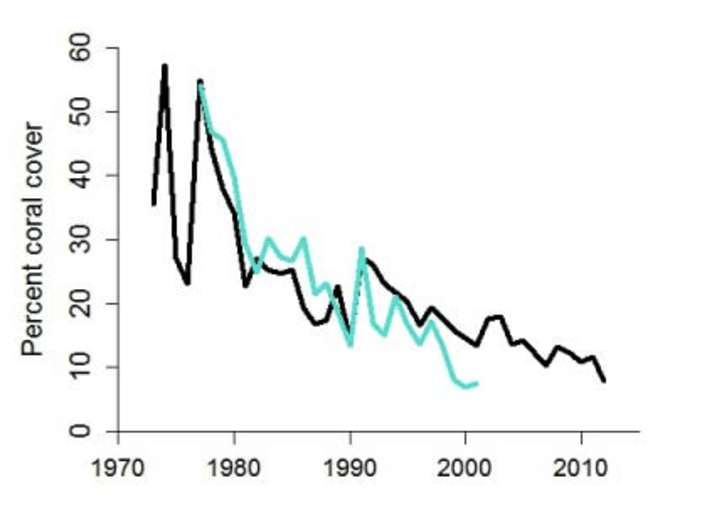
Song of the Decline in Percent of Coral Cover
12023-12-20T00:40:36+00:00Kira Elliott5115f8a8651cc7980035816c2b798a501711fce111Composed by Kira Elliottplain2023-12-20T00:40:36+00:00Kira Elliott5115f8a8651cc7980035816c2b798a501711fce1
This page is referenced by:
1media/Grenada_Under_Water_-_panoramio_-_Stefan_und_Bille_(6).jpegmedia/Grenada_Under_Water_-_panoramio_-_Stefan_und_Bille_(6).jpegmedia/Grenada_Under_Water_-_panoramio_-_Stefan_und_Bille_(6).jpeg2023-12-20T00:33:02+00:00Song of Coral's Death in Grenada12By Kira Elliottimage_header2024-08-06T21:03:58+00:00
Song of Coral's Death in Grenada
Coral reefs are beautiful, fragile, and deeply important ecosystems to the marine world; they occur in less than 1% of the ocean but are home to about 25% of ocean species. As oceans become warmer and more acidic, coral reefs are dying. Some data argues there has been a loss of 14% of coral reefs on the planet. The project you hear and see is the sound of coral reefs dying. I was able to translate data about live coral reef cover to a key on a piano. Each key note on a piano represents a percentage of live coral reef cover from 1970 to 2010 in protected coral reef sites in Grenada and Carriacou. The first note you hear of this musical representation is the third D# on the piano; this note represents the 35% of live coral reef cover in 1973 in the Caribbean reef. The coral reef cover grew to 59% which is represented by the fifth key of C on the piano. As you listen you will hear the consistent decline of coral reef population over forty years. This project is intended to emotionally move and stimulate the listener in a different way than looking at a graph. This representation and a graph will show you the decline in coral reef population due to warming and acidic oceans, but this musical representation is able to provide an eerie and disturbing feeling appropriate for understanding the impact of coral reef bleaching. This project uses data from a 2013 report on ecological and socio-economic conditions of coral reef cover in protected coral reef sites in Carriacou and Grenada.
Musical Process
The process to transform the data from this graph to musical notation required me to take the percentages of coral cover and apply them to the 88 keys on the piano. I then rounded the percentages to the nearest full number and used that number as the key on the piano I would play. Next I used my music theory knowledge to emphasize the increase or decrease in coral cover with basic scales or chord progressions. Finally, I used an online musical notation platform to transform the raw numbers, as piano keys, to notes on a sheet of piano music. This is the musical notation of the Song of Coral's Death in Grenada.
Bibliography
Aucoin, Serge. (2013). Report on ecological and socio-economic conditions at ridge-to-reef project sites (Grenada). https://www.researchgate.net/publication/309732811_Report_on_ecological_and_socio-economic_conditions_at_ridge-to-reef_project_sites_Grenada#pf6