Test - birds on tree
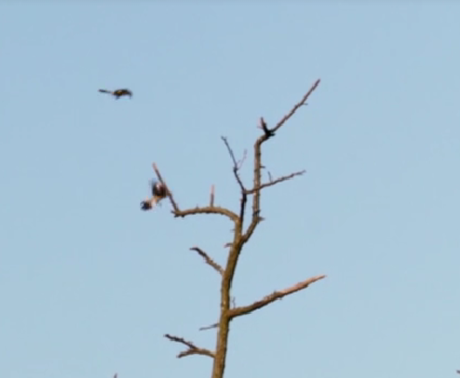
1 media/Screenshot 2024-08-01 132022_thumb.png 2024-08-03T02:37:55+00:00 Autumn Shemitz 3fcdfa2d751efef4e33e56f7ca65280f5718b39e 1 2 Two birds fight for the same branch plain 2024-08-03T02:39:04+00:00 Autumn Shemitz 3fcdfa2d751efef4e33e56f7ca65280f5718b39eThis page is referenced by:
-
1
media/Screenshot 2024-07-28 213316.png
media/Screenshot 2024-07-28 212041.png
2024-07-21T18:49:22+00:00
Test (Aleksandr Kott)
58
A film about a girl living near a nuclear testing site
image_header
2024-08-05T14:57:15+00:00
In August of 1949, the Soviet Union tested its first atomic bomb at the Semipalatinsk Test Site in a part of the Soviet Union which is present-day Kazakhstan. The explosion occurred at six a.m., just as the sun was rising and many people woke up next to their loved ones. The film Test (2014) by Aleksandr Kott is set in the days leading up to this explosion. The sun rises and sets throughout the movie, and as the sun rises for the last time, fictional characters Dina and Max hold hands for the first and last time.
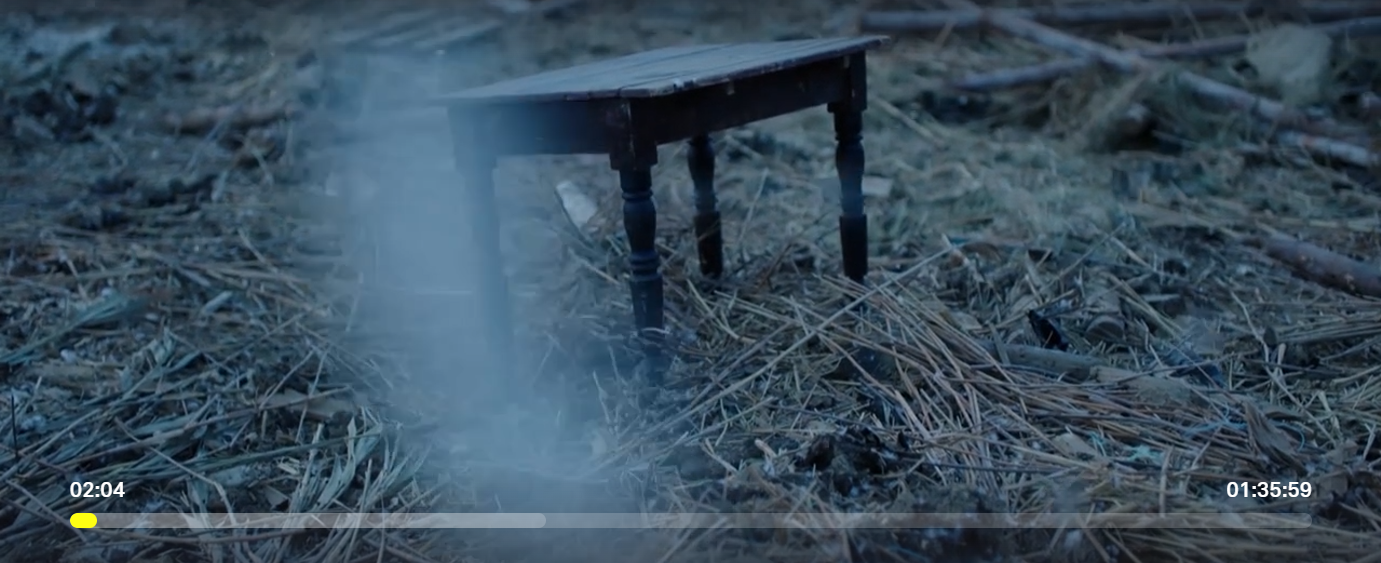
The film opens with a flash-forward to after the nuclear explosion, where the frame shows feathers littering the ground and everything decimated, except for a small table, which later on Dina and her father will drink tea on. Dina and her father, Tolgat, live a simple life on an isolated farm near a nuclear testing site in the Soviet Union. Throughout the movie, Dina cares for her father as his health declines, and he eventually dies. Meanwhile, Dina receives attention from two boys: Kaisyn, a local boy who often takes Dina on horseback rides, and Max, a foreign boy with a passion for photography. The two boys often fight over Dina, but in the end it is Max holding Dina’s hand when the nuclear explosion kills them all.The strife between the two boys is represented metaphorically through the imagery of birds. This is most clear when two birds fight for the same branch on a dead tree, and the newer bird succeeds. The newer bird both represents Max and a newer way of life. The new bird succeeding foreshadows a newer, nuclear way of life taking over. Additionally, the bird feathers in the opening scene foreshadow not only the physical destruction caused by the nuclear explosion, but also the emotional turmoil. The feathers are a relationship destroyed. Within all the chaos, however, the tea table remains intact, sending the message that family bonds remain solid in times of hardship. While the role that relationships play in the film may seem designed for entertainment and unrelated to nuclear power, it lurks behind the relationships, and as its presence in life increases, people’s struggles increase, as well.
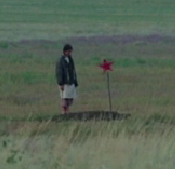
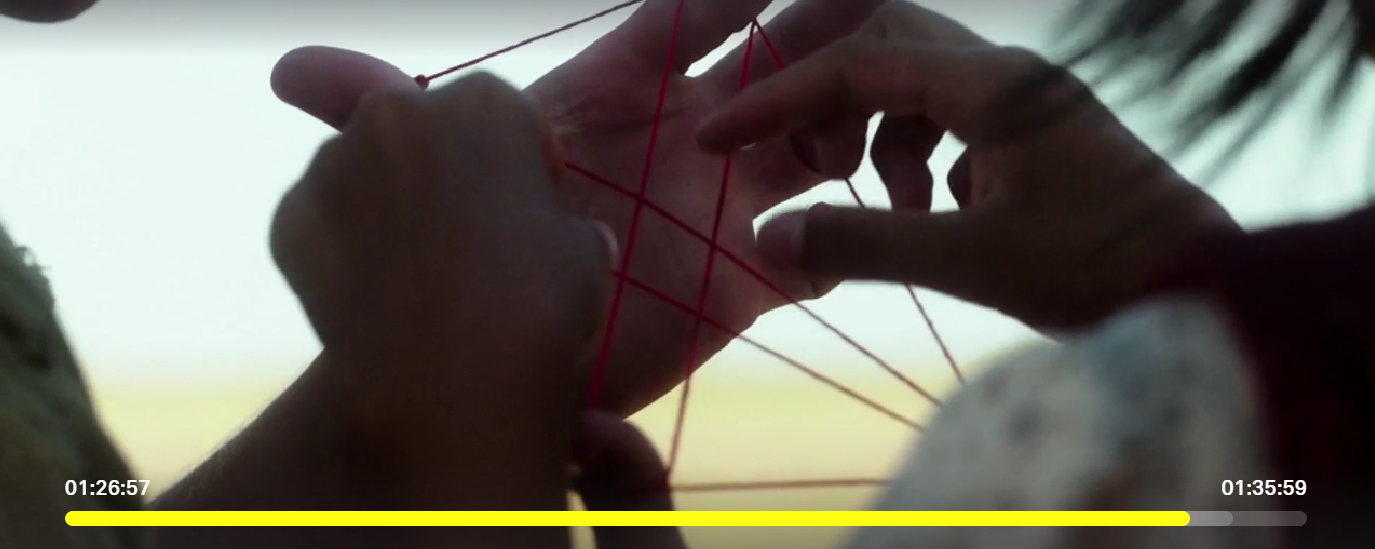
Aside from bird imagery, another symbol used in Test is the color red. Before even noting how the color is utilized in the film, the cultural context of red in the Soviet Union is essential background knowledge. Red is often used as a symbol for communism, especially when in the shape of a five pointed star, which represents the five fingers of a worker’s hand. Early in the film, Dina’s father can be seen wearing an aviation uniform with a red star and seemingly reliving his days as a pilot. Dina’s marking of her father's grave with a red star made of yarn indicates that he was a respectable soviet. Later in the film, moments before the explosion, Dina and Max play cat’s cradle with the same red yarn. Although Dina and her father die in separate ways — from the explosion and from radiation poisoning, respectively — the symbolism of the red yarn demonstrates that their deaths were linked in that they were both at the hands of the Russian Communist Party and their hunger for nuclear power.
Test by Aleksandr Kott uses metaphors to both represent interpersonal relationships and convey political messages. The film lacks dialogue, which emphasizes the visual metaphors present: the communist regime represented in the color red, and characters relations represented by birds. Nuclear energy is behind both of Kott’s narratives, and ultimately so much more. Although nuclear energy is often considered to be more environmentally-friendly than other energy sources such as coal or oil, there are still negative ramifications to explore. One example is the mining of uranium (the basis of nuclear energy) which can cause habitat disruption. Ultimately, through varying forms of metaphors in Test, all stemming from a nuclear testing site in The Soviet Union in 1949, one can clearly see that nuclear energy affects humanity in a myriad of ways. The mere presence of nuclear energy and radiation in people’s lives affects humans’ relationships with one another, from health struggles to the balancing of new versus traditional values.
BibliographyIMDb. “Aleksandr Kott | Director, Producer, Writer.” IMDb, IMDb.Com, www.imdb.com/name/nm0467811/?ref_=tt_ov_dr. Accessed 28 July 2024.
Kott, Aleksandr, director. Test. Igor Tolstunov’s Film Production Company, 2014. https://tubitv.com/movies/636202/test.
Kubilius, Kerry. “The Significance of the Color Red in Russian Culture.” ThoughtCo, 3 June 2019, www.thoughtco.com/red-in-russian-culture-1502319. Accessed 28 July 2024.
Simon, Scott. “Russia’s Communist Party Seeks to Copyright Red Star Symbol.” Weekend Edition Saturday from NPR, 9 Apr. 2016, www.npr.org/2016/04/09/473623505/communist-party-seeks-to-copyright-red-star-symbol.
“Soviet Tests.” PBS, Public Broadcasting Service, www.pbs.org/wgbh/americanexperience/features/bomb-soviet-tests/#:~:text=First%20Soviet%20Test,Semipalatinsk%20Test%20Site%2C%20in%20Kazakhstan. Accessed 28 July 2024.