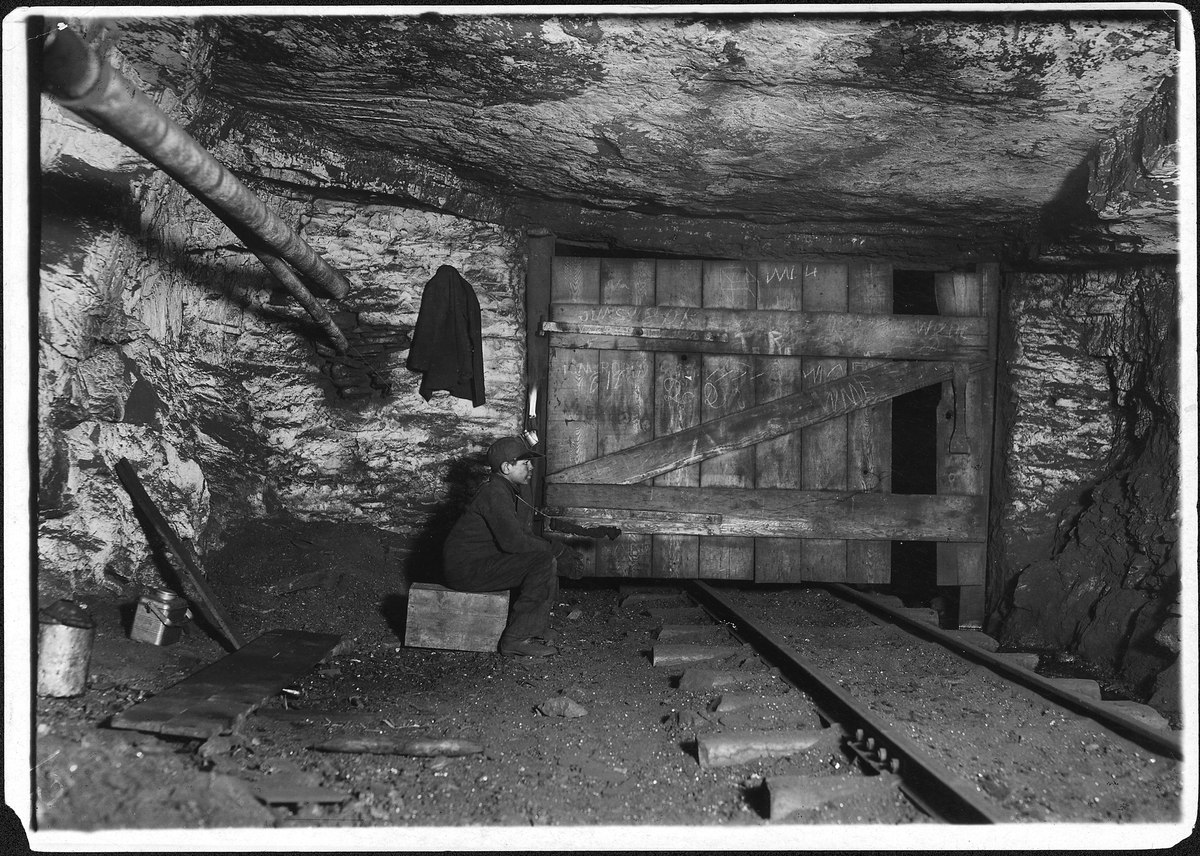
Miners Drilling
1 2022-08-01T14:45:07+00:00 Rezwana Sarder 5afb9a92910a86656a51dcb58e5c28d0492b6d59 1 1 Taken 14 May 2008, 13:18 plain 2022-08-01T14:45:07+00:00 National Institute for Occupational Safety and Health (NIOSH) from USA, Public domain, via Wikimedia Commons Rezwana Sarder 5afb9a92910a86656a51dcb58e5c28d0492b6d59This page is referenced by:
-
1
2022-07-31T18:54:13+00:00
"Hollow"
38
by Breece D'J Pancake
image_header
2022-08-08T00:48:09+00:00
"Hollow" is a short story written by Breece D'J Pancake.
About the Author
Breece D’J Pancake is often boasted to have been one of the most influential (but unknown by name) writers of his era and is best known for his brilliant short stories, which were written in the last few years of his life. Pancake was born in a rural, coal-centric town—South Charleston, West Virginia—on June 29, 1952; Pancake died by suicide at the young age of 26 on April 8, 1979, in Charlottesville, Virginia. Most of Pancake's writing revolved around mining in small rural towns such as the one he was raised in, and the contents of his work were based on his own experiences growing up. And despite his method of adapting his experiences into different plots, Pancake was a well regarded and beloved as a writer due to the relatability of his characters, and how timeless the core concepts of his writing are. His works were never meant to fit a mold; they stand out because of how interpretive they are and the various lenses you can study them through. Twelve of his short stories, including "Hollow," were published posthumously in 1983 with the help of his mother, Helen Pancake, and Atlantic Monthly Press/Little Brown.Summary
Breece D'J Pancake’s short story "Hollow" features Buddy, an alcoholic coal miner, and snippets of his life working and living in a small rural town. While Buddy is at work, he’s doing okay — the physical labor doesn’t leave him much energy to think about other things. As soon as Buddy is ready to return home, he’s thinking of the expenses his girlfriend is racking up, and reflecting on how impactful that money would’ve been to feed his mother and sisters. Buddy continues to reflect on his relationship, and he communicates how he’s cognizant of his girlfriend Sally’s wants, and how she doesn’t long for him anymore; she is ready to leave him for another miner in town, Fuller (a childhood enemy of Buddy). That night, Buddy drinks, and the very next day, Sally and his dog Lindy are with Fuller. Quickly after, Buddy seems to be setting up a fight with Fuller and eventually returns home with his dog, a hazy recollection of his night and injuries, and even a memory of Sally’s smile, but no Sally.When Buddy wakes up, he has another drink, despite his hellish hung-over state. Buddy’s consumption of alcohol never lessens. He pours himself another drink after he finds Lindy harmed by the pack dogs outside. And in his drunken state, he opts to hunt for food because there was no meat for him or Lindy to eat at home. In the forest, drunk Buddy wins big game: he shoots a doe and quickly tears into her. In a moment of savagery, Buddy kicks aside the unborn fawn in the doe’s womb, and eats the doe’s insides raw; Buddy also graciously leaves some of the doe’s internal organs aside for scavengers. This brings about the end of the story, with a bobcat watching and waiting for Buddy and Lindy to leave its territory.
Analysis
Coal mining has never been a profitable profession for miners; the industry leeches off those who cannot change the circumstances they’re in and who are desperate to make a living for themselves and their families. Because the industry and those who lead it are more concerned about making profits, miners are mistreated and underpaid for their work. In "Hollow," the author comments on the parasitic nature of the coal mining industry through his protagonist, Buddy. Buddy’s increasing dependency on external releases stems from the insufficient support and pay he receives as a coal miner, causing his character to embark on a downward spiral, and ultimately accentuating the lack of consideration coal miners receive.The beginning of Buddy’s downward spiral is foreshadowed at a funeral he partook in during his formative years. At the funeral, Buddy was “standing in the sun” while his “new shoes pinched his feet” (Pancake). The sun’s positive connotation is overshadowed by the negative connotation of the funeral — Buddy’s exposure to the true nature of coal mining will become his downfall. In addition, his shoes weren’t a comfortable fit; pinched feet represent a strenuous journey, indicating the dark nature of the change Buddy would slowly undergo. Now as an adult coal miner, Buddy grows to slowly recognize how limited he truly is; the government doesn’t distribute enough aid for the miners and the company doesn’t pay him or the other miners a liveable wage, especially considering the arduous amount of labor they all do. This frustration he has is expressed through random outbursts of violence, like when “his hand flashed across the table” in a threatening manner towards his girlfriend and when he violently tears into a dead doe and “kicked the [its] unborn fawn aside” (Pancake). Buddy’s lack of remorse in these instances shows how numb he is to the environment around him, and it highlights how desperately miners need to be looked after. Buddy perceives violence as an acceptable manner of coping with his feelings and releasing his pent-up aggression without any fear of consequences, because he is not given the resources by his community, employers, or the government to know or learn any better.
Buddy’s casual consumption of alcohol, and the normalization of alcohol dependency in coal mining communities, is yet another product of this neglected industry. Whenever Buddy is unable to process his emotions properly, he pours “bourbon for his coffee” and when he is overwhelmed with his emotions he gets so intoxicated he can't “remember how he got there [to different places]” (Pancake). His repeated instances of self-medication suggest how coal miners are taken advantage of with little compensation. As a liquid, alcohol is symbolically meant to be cleansing, but too much of it can drown the drinker, as is what happens to Buddy. His overindulgence of alcohol has further defiled his character and has deluded him into believing that this vice will help him escape the harsh reality of coal mining life. His experiences express how nobody has made any tangible effort to alleviate the situation and facilitate safer spaces for miners.
Buddy’s violent tendencies and alcohol dependency go hand in hand with each other because they foster a place for each other in Buddy’s life — Buddy drinks and then becomes violent and he becomes violent because he drinks. Interestingly, alcohol is Buddy’s pick of poison, because it’s a vice most typically blame their actions on, but Buddy isn’t being held accountable to anyone. The very aspects of Buddy's life that is meant to be purifying is venomous to him instead; his present and future are sullied by the dirty and neglectful industry he serves, and because of this, Buddy is ultimately alone with no support system and nobody to help him climb out of his downward spiral.
Works Cited
Casto, James E. “Breece D'J Pancake: An Appalachian Voice Stilled Too Soon.” Charleston Gazette Mail, 26 Feb. 2021, https://www.wvgazettemail.com/dailymailwv/daily_mail_news/breece-d-j-pancake-an-appalachian-voice-stilled-too-soon/article_352ebf28-3c00-5967-aa98-2d9c3da16cd6.html#:~:text=%E2%80%9CThe%20Stories%20of%20Breece%20D,her%20son%20had%20left%20behind.
Pancake, Breece. "Hollow." The Atlantic. Atlantic Media Company, 1 Oct. 1982. Web. 31 July 2022. http://www.theatlantic.com/magazine/archive/1982/10/hollow/376308/.