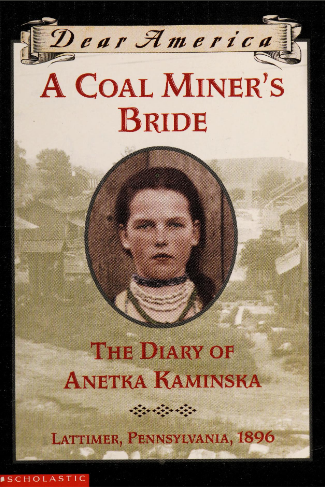
A Coal Miner's Bride: The Diary of Anetka Kaminska, Lattimer PA 1896 (Susan Bartoletti)
_______________________
About the author
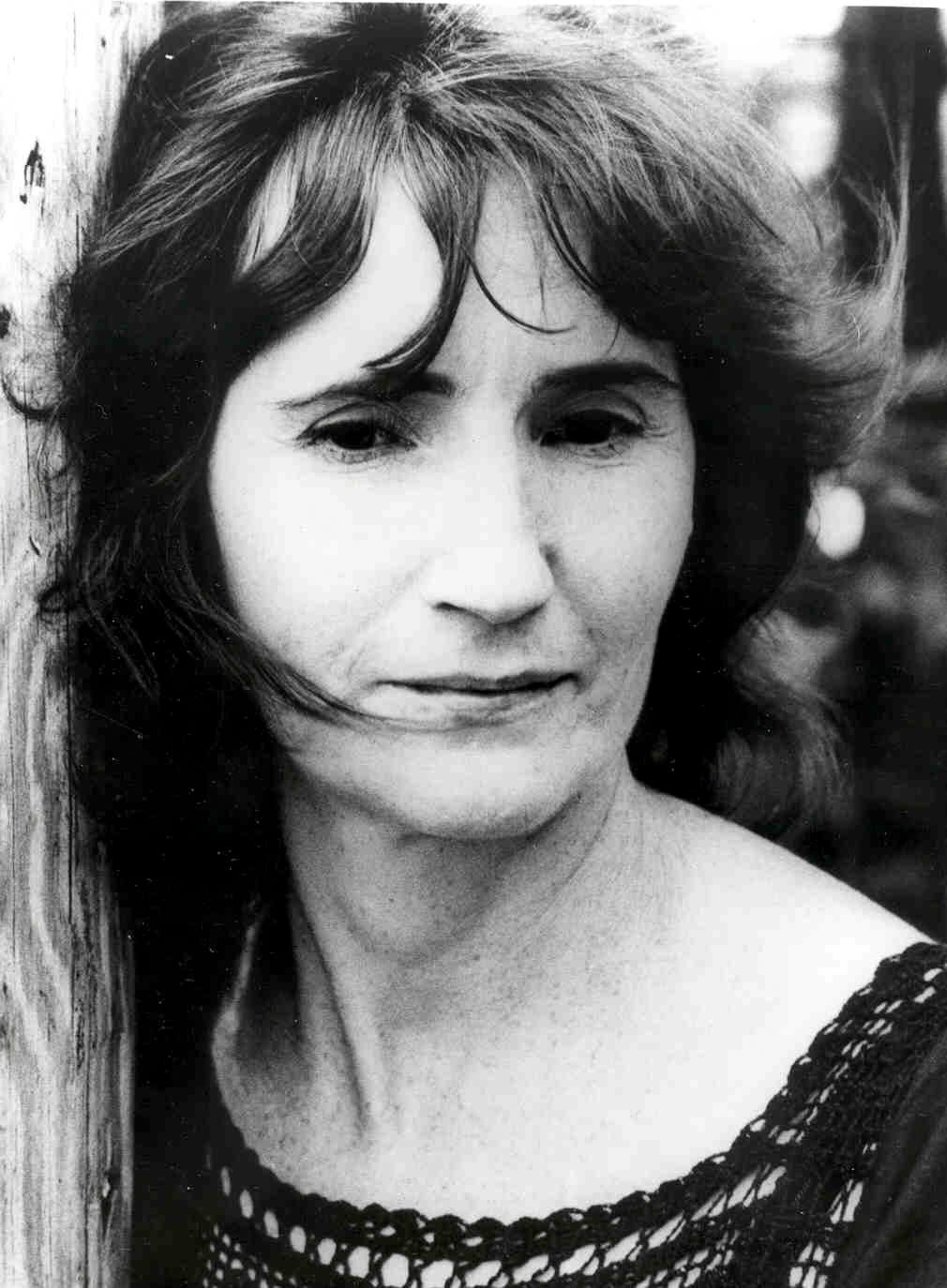
The author of A Coal Miner’s Bride is Susan Bartoletti. She is an accomplished writer who has written numerous titles including the entirety of the Dear America series. Bartoletti was born in November 1958 and has since then published many poems, novels, short stories, picture books, and non-fiction books. She is primarily a writer for children and focuses on historical genres. Bartoletti once said that she wishes that her writing will peak kids’ curiosity, ask questions, and become courageous enough to know they could make a difference (Gates, Lacy, “Pennsylvania Center for the Book.” Pabook.libraries.psu.edu, 2018, pabook.libraries.psu.edu/literary-cultural-heritage-map-pa/bios/Bartoletti__Susan_Campbell.).
______________________
Summary
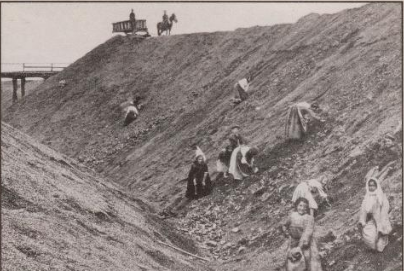
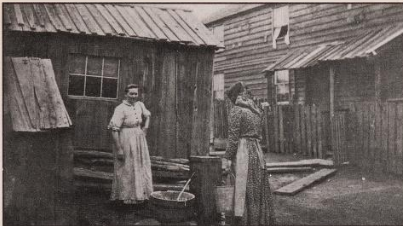
A Coal Miner’s Bride by Susan Bartoletti is a work of historical fiction that attempts to convey the living conditions and daily life of a coal miner’s bride as a Polish immigrant in Lattimer, Pennsylvania from 1896 to 1897. Although the work is fiction, the historical situations found in the book, are true. Bartoletti introduces readers to the main character Anetka Kaminska, a 13-year-old girl who lives in Poland with her grandma and brother. Her mother died, and her father went to America to escape the Czar’s rule and find work in the Anthracite Coal mines of Pennsylvania to send money home to his family. As the book progresses, Anetka and her brother get paid passage to America, along with her friend Leon, so they can make a new life with her arranged marriage with a coal miner her father works with, Stanley. Anetka begins to acclimate to the new surroundings she’s found herself in taking care of her new husband’s three young daughters, taking care of her home, preparing food, and doing her part in picking coal out of the culm bank.
Just as she has found a rhythm to her new lonesome life, feeling underappreciated by her husband with all the work she does not only for the home but harvesting bees on the side for extra money, she finds out that there has been a coal mining accident, and her husband has died and left a lot of debt to fall on her. Now with even more responsibility and anger in her, she prays for God to answer her prayers and stay with her even when she doesn't know why all these terrible events are happening. She builds a plan to take on three boarders to get some money to pay rent and begin paying off Stanley’s debt. Anetka’s character grows, and she becomes more resilient, independent, and strong, and resolves to never again marry someone who doesn’t love her and whom she doesn’t love. Anetka’s father and brother also come to live with her, and she reunites with her friend Leon.
It’s 1897 now, talk of strikes looms in the Lattimer mining community, and Leon is a major sympathizer and leader in organizing and convincing miners to join the strike to achieve better working rights. Anetka cares for Leon and is scared of something happening and many people getting hurt or killed, she frequently finds herself putting on a brave face in front of her friends who don’t want the strike to come to Lattimer. After the Lattimer Massacre, Leon goes missing and several others have been killed and injured. Anetka is left with the damage and the Americans are even more hateful towards the foreigners in the community. This main event of the massacre leads to Anetka essentially going mad, cleaning and cooking, being angry all the time, and praying constantly to God about how selfish He was for taking so many people away from her. Once several weeks go by, Leon returns home, and he and Anetka marry and have a daughter.
____________________
Analysis
A Coal Miner’s Bride uses themes of coal and gender roles to thread together a historical story communicating what it was like to have lived in Lattimer, PA during 1897. Coal was intertwined into Anetka’s story because it was what brought her to America, like why many others immigrated to Pennsylvania from Europe. The coal mines offered many jobs and contrary to what was offered in immigrants’ home countries, much better pay, making it one of the main reasons many immigrants from Eastern Europe came to work in the mines.
In Anetka’s case, once she moved, coal became the center of her world; she discovers new hardships, feelings, and traumatizing events because of the new mining community she’s now calling home. Not only seeing the effects that coal brings to her own life, Anetka also sees how it affects the people and setting around her (i.e., her father, brother, and husband): “The same black coal dust coats everything – the fence, the grass, the trees, the garden. In the distance, the coal breaker rumbles, sending up more black clouds. A coal train waits outside the breaker. Car after car is heaped with hard, black coal. Lattimer is a bleak patch village, with its noisy breaker, black shanties, and dangerous culm banks. It’s nothing at all like Sadowka.” (Bartoletti, 74). Bartoletti chooses Anetka’s perspective on coal to be negative, by describing her community with “black coal dust” that “coats everything” and using language such as bleak, dangerous, and noisy. The effect gives readers the impression that nothing good or happy will happen here and instills a mood of claustrophobia because of the repetition of the black clouds that are hung everywhere, making it seem gloomy and never sunny.
Additionally, Bartoletti uses gender roles to tell Anetka’s story because in the 1980s gender roles had a fine line between what was for women and men to do. For example, even what they wear conveys where a man comes from and what is expected of his wife to wear: “The Hungarian men are easy to identify by their rough jackets and top boots. The Russian men wear belted shirts with tight-fitting collars and bloused trousers tucked into the boots. Most men have beards or mustaches. No matter what country they are from, all the women wear kerchiefs, a wool shawl, and colorful aprons” (Bartoletti, 41). This choice of topic also allows for significant character growth for Anetka because of what her passions are versus her duties and how she balances the two. The book starts with a bright young girl who wishes to marry for love but after being married off and her husband dying, she becomes very angry at her dead husband, her father, God, and herself: “most of all I hate Lattimer and the coal mines that make widows out of wives and orphans out of children” (Bartoletti, 142). This quote particularly sticks out because of the use of absolute wording and distress tied to the words. These small but meaningful choices made by the author become core pieces of what makes Anetka who she is, as well as the reality for many other girls during her time. After these difficult adjustments, Anetka has found the strength she needs to be an independent single mother who doesn’t get pushed around and doesn’t except anything but respect from the people around her. Lastly, Anetka shows her persistence in how she carries out all her daily tasks and gains confidence in herself the longer she is in America. The gender roles shown in A Coal Miner’s Bride shed light on the difficulty of the times for women who were taught to depend on their husbands for money and brought out the importance of these roles in coal mining towns. Coal became the theme that tied together the community ad economy and the way people contributed. For example, as shown in Bartoletti’s work, she describes how children do their part in the culms, men do their part in the mines, and mothers/women do their part in taking care of the home, and going to the culms with the children. All the tasks are because of coal and its significance in these towns, which also furthers gender identity and place in the 1980s in places like Lattimer, PA.
_______________________
Conclusion
In summary, A Coal Miner's Bride showcases the day-to-day lives of immigrants in America trying to live the American Dream in Lattimer, PA, mining coal and building a home for themselves. In this, we see the destruction that coal had on the town and the conflict it caused in the community between mine owners' big coal industries, and the miners themselves. Through Anetka’s eyes, readers see the hardship and reality that coal had on people, including children, wives, and men. While the men went to work in the mine, women and children went up to the culms to pick out coal, and boys went to work picking slate. All of these jobs and duties took a certain toll on the people whether it was raw fingers or blackened coal stained between your fingernails. Through the story, these themes relinquished an understanding upon the reader to value the lives that once lived and see what impact coal has had and still has to a huge extent on the world and where it's headed.
_________________________________________________________________________________
_______________________
Bibliography
Bartoletti, Suzan. A Coal Miner’s Bride. Scholastic inc., 2000
Gates, Lacy, “Pennsylvania Center for the Book.” Pabook.libraries.psu.edu, 2018, pabook.libraries.psu.edu/literary-cultural-heritage-map-pa/bios/Bartoletti__Susan Campbell.
This page has paths:
- Coal Texts José Vergara