The Outskirts
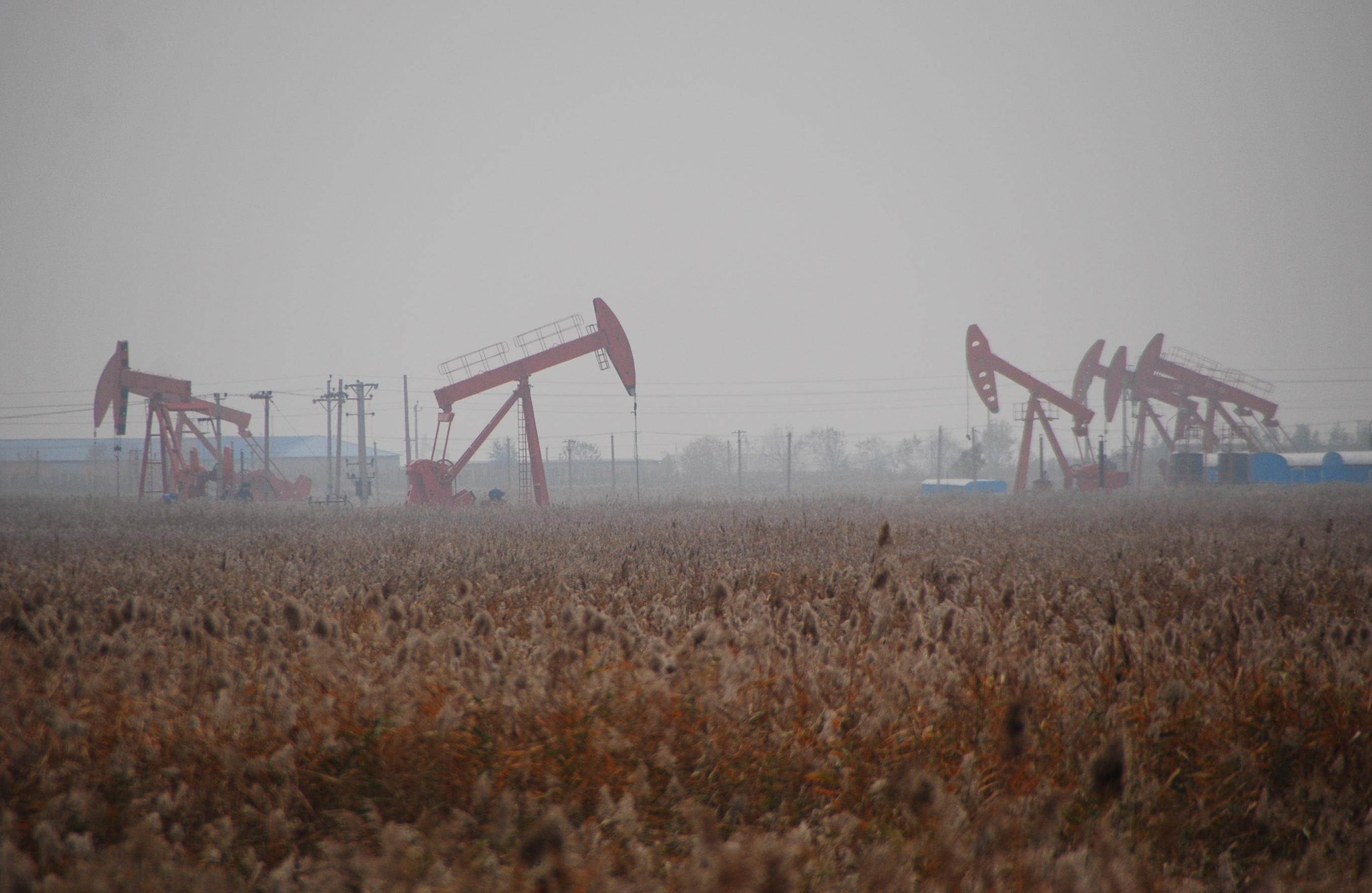
Although a date is not mentioned, we can assume that it is after World War II since the farmers mentioned that they were WW2 veterans. The farmers come from low-income backgrounds and live in rural Russia; in the farmers' journey to fight for justice, their last stop is in the oil company building in the capital of Russia, Moscow. When they reach the capital, Philip Ilich says, "It's like an Egyptian pyramid"; he is referring to the oil wells, as seen below.
The interactions that the farmers have with the oil industry are ones of dislike and injustice. Although this industry benefits wealthy people, the farmers are subjected to either fight for their land or suffer from all the effects that might come with these practices. With this mentioned, this film is an attack on modern capitalism in Russia. This elitist mindset of taking someone’s land for your own can be one of the factors of how this is an attack on modern capitalism in Russia. The corruption that the farmers had to deal with and the “keeping quiet” of all the bureaucrats in the film is a major flaw still today. The meaning of the oil industry in this film is one that takes over the lives of people and is met with violence to whoever does not agree to it. “How come our land got sold without us knowing?” says Philip Ilych in the beginning of the film when he finds out that their land was stolen. In addition to this, the people running the oil industry are ones who crave money: the more land they get, the more money, no matter the cost it has on the people living around the area. When the farmers get to the last perpetrator, the one in charge of all the damage done, he shows the farmers how much oil he had from all over the world.
This film addresses the relationship between farmers and the oil industry as one of a parasitic relationship. A parasitic relationship refers to one in which something/someone benefits off of something/someone while harming it and possibly leading to death. The oil industry is benefiting off of the farmer's land while the farmers are left with nothing to sustain their everyday life. The imagery of the film can also give us an accurate description of how life was. One thing that caught my eye was that throughout the film it never stops snowing. Snow can be used as a symbol of death and morality. During winter, it is the end of many things such as the comforting warmth and the colorful environment. This ties in the film in the sense that it is the end of justice and the beginning of corruption and oil production. Consequently, it links to the end of the farmer’s job, which produces the food they eat as well.
Furthermore, the representation of snow in the film being a symbol of death and morality has a relationship between the farmers and the oil industry. There being no moral compass of the person in charge of stealing their land and running the oil sites, the farmers, as previously mentioned, are forced to do something about it. In relation to death in the film, it can be seen from a farming perspective and with the oil industry. In the farming perspective, crops do not harvest in the winter time and they have to rely on hunting. In the film, Philip Ilych and his niece go hunting, but they have no luck catching anything. In addition to this, in the oil industry perspective, it is seen as the death of the farmer's way of life all throughout.
In the film, The Outskirts, we are introduced to a group of farmers that fight for their stolen land. Facing corrupt bureaucrats, they were able to get what was theirs. In the film, we are introduced to a set of circumstances that would make the watcher assume it is an attack on modern capitalism in Russia. These include the endless snow through the entire film, and how the oil production is portrayed in the film. The oil production, regarding this film, has a negative outlook. While being extremely exploitive of land and its resources, the immense power that the people in charge of these oil production sites generates is harmful for the people living in the areas.
Bibliography:
The Outskirts. Directed by Pyotr Lutsik. 1998.
“The Outskirts (Окраина) 1998 in English Online.” Soviet and Russian Movies in English | Watch Online Soviet and Russian Movies with English Subtitles, 22 Oct. 2020, https://sovietmoviesonline.com/drama/okraina.
This page has paths:
- Oil Texts José Vergara