Cat's Cradle: Nuclear Weapons and Nihilism
Summary
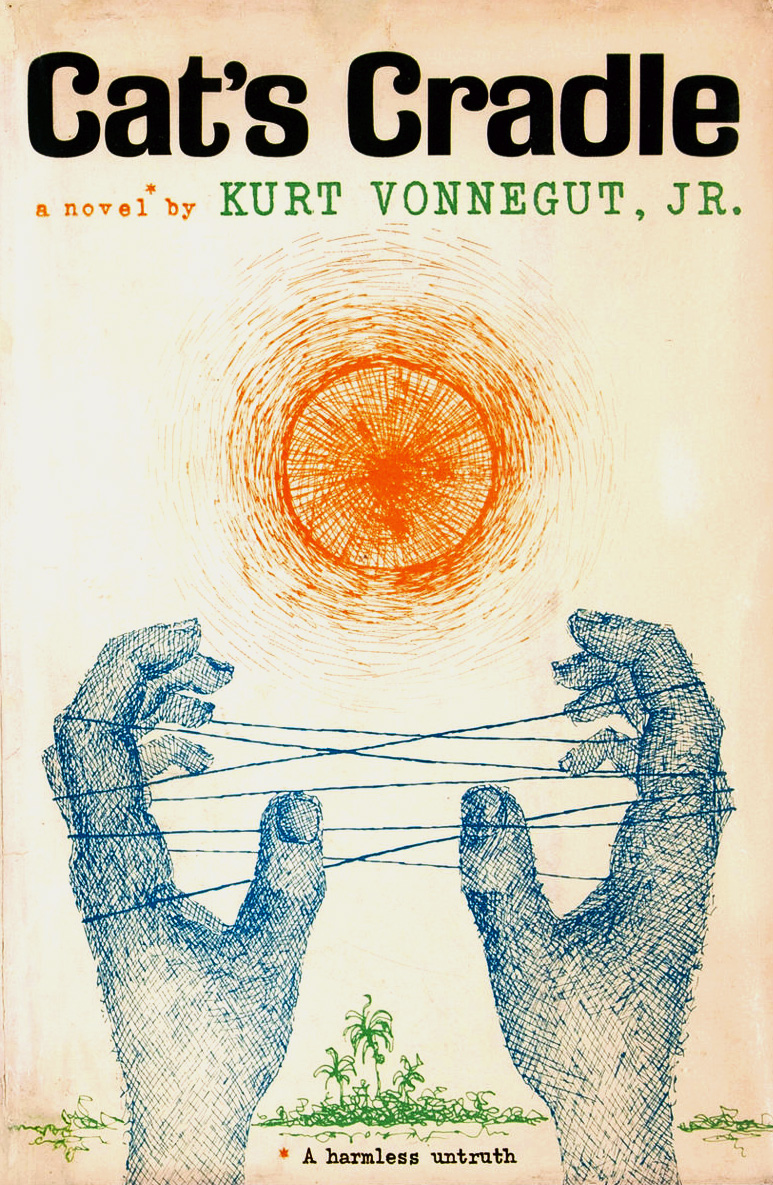
Cat's Cradle by Kurt Vonnegut (1922—2007), an American fiction writer mainly known for his satirical writing, was published in 1963. The novel follows the story of a journalist named Jonah as he tries to write a book about the day the Americans dropped the atomic bomb on Hiroshima. He investigates a scientist named Felix Hoenikker, who is credited with being “one of the so-called ‘Fathers’ of the first atomic bomb” (Vonnegut 16). Hoenikker is also the creator of a type of ice called ice-nine, an invention that could lead to the destruction of the entire planet. Wanting to meet Hoenikker’s children to hear their perspectives on their father, Jonah ends up in the Republic of San Lorenzo where he discovers that ice-nine is present, until the inevitable occurs: the entire planet freezes over. Afterwards, Jonah lives with a few other survivors in a post-apocalyptic world. One of the main pillars of the story is the religion Bokononism, of which Jonah becomes a devout believer, and one of the main tensions is the pursuit of science—and “truth”—versus the principle of untruths within Bokononism.
Analysis
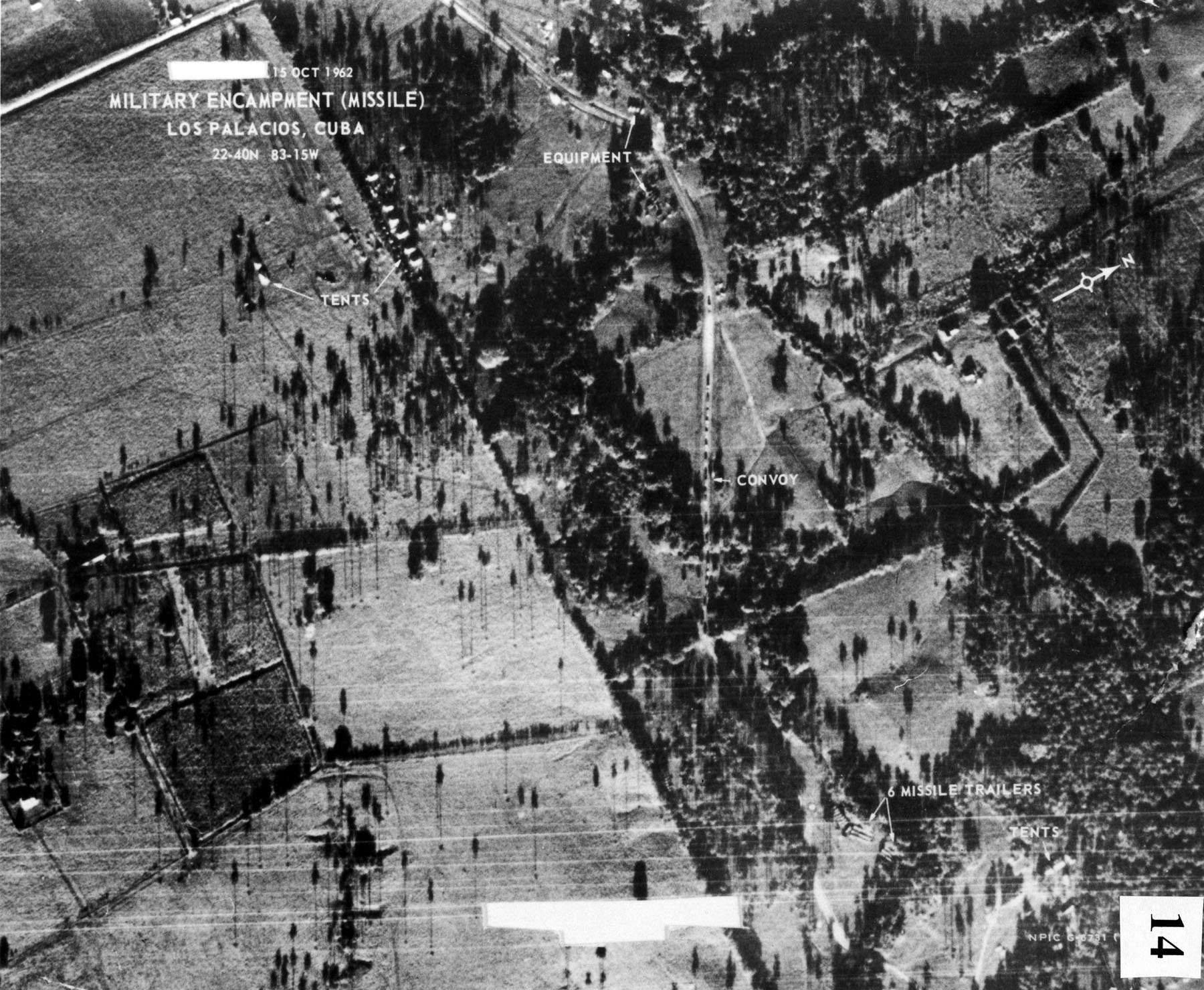
This book does not specifically center on nuclear bombs—and yet it does. Most of the plot follows Jonah’s investigation into ice-nine, and ice-nine can be read as a parallel of the real-world fear of nuclear escalation. Cat’s Cradle was published after the Cuban Missile Crisis; Vonnegut was more than aware that a global apocalypse was a true threat. The topic of the atomic bomb fades into the background when Jonah becomes more interested in ice-nine and Hoenikker’s family. Its consequences are hardly discussed. Ice-nine is the new lurking mystery, the plaything of a single scientist. Originally developed as a military strategy to help American soldiers through mud, it later causes the freezing of the entire planet. The critique of the absurd indifference of scientists who create inventions with horrific consequences can be read as a symptom of nuclear weapon development. If energy revolutions create new cultures, then Vonnegut is arguing that nuclear energy has caused the reactionary culture of nihilism found throughout the book, from the dialogue of prostitutes in bars to the values of Bokononism. One poem found in The Books of Bokonon, Bokononism's religious text, reads, “Tiger got to hunt, / Bird got to fly; / Man got to sit and wonder, ‘Why, why, why?’ / Tiger got to sleep, / Bird got to land; / Man got to tell himself he understand” (150). Nuclear warfare is an incredibly difficult threat to conceptualize. Bokononism suggests that humans try to comfort themselves with lies. After all, how does one live, day after day, with the idea of nuclear apocalypse ruling their brain? The very form of Cat’s Cradle—satire—aligns with the Bokononist view. The dark humor mocks everyone and everything while remaining wholeheartedly pessimistic about the future. Strategies like satirical writing attempt to navigate the nihilistic culture nuclear weapons have created.
An additional element of the novel's anti-nuclear weapon perspective, the atomic bomb in Cat’s Cradle is somewhat of a source of pride for the Hoenikker family. Though each of Felix Hoenikker's children has a slightly different attitude, they see it as a contribution their father made to the world. Angela, the eldest daughter, describes the dropping of the atomic bomb on Hiroshima as the day her father “won the war” (24). She even fights her younger brother over an insult about their father. Angela represents another face of the culture of denial that nuclear energy breeds—she embraces the atomic bomb, believing its power somehow makes up for her father’s neglectful behavior. Through Angela and the other children, Vonnegut mocks their real-life counterparts who found American pride in the bombings of Hiroshima and Nagasaki. On the contrary, Jonah refers to the dropping of the bomb on Hiroshima as “The Day the World Ended” (13). As an ordinary citizen with anti-nuclear leanings, he embraces the atomic bomb as an apocalyptic force long before ice-nine freezes the planet. His choice of words early in the book emphasizes the horrors of new weapon technologies, as ice-nine was the bigger threat all along, even though Jonah already thought the world ended with the atomic bomb. Humans are constantly finding ways to harness energy to do more and more horrific destruction. The threads of fear and despair throughout this book entangle themselves into an image to which the reader must decide to assign meaning or not—hence, the cat's cradle metaphor.


Conclusion
Nuclear energy and the threat of nuclear apocalypse feel much too big for humanity. Nuclear weapons are "hyperobjects," a term invented by author Timothy Morton, who refers to them as "things that are massively distributed in time and space relative to humans" (Morton 1). They have effects that extend far beyond the scope of human understanding. Therefore, nuclear weapons beg to be written about in fantastical ways. Ice-nine exaggerates the fears that atomic bombs already represent: the massive, apocalyptic scope of damage, and the carelessness of the people who invent and wield these weapons. Another motif in Cat’s Cradle is the comparison of science to magic. When it comes to nuclear weapons, science does seem unbelievable, otherworldly, and alien. What ordinary person can prove that atomic bombs are not magic? Elements of the novel such as ice-nine do not seem like much of an exaggeration. Cat’s Cradle may be a book of untruths, but it is honest in its fear, anger, and humor. How do human minds accommodate a near-boundless force of violence and destruction? Nihilism is an easy choice. Naturally, in the face of nuclear apocalypse, what else is left to do but laugh?
Bibliography
Atomic Bombing of Japan. 29 Mar. 2013. Wikimedia Commons, https://commons.wikimedia.org/wiki/File:Atomic_bombing_of_Japan.jpg.
Cat’s Cradle (1st ed. cover). 20 Aug. 2019. Wikimedia Commons, https://upload.wikimedia.org/wikipedia/commons/6/6b/Cat%27s_Cradle_%281st_ed._cover%29_-_Vonnegut.jpg.
Cat's Cradle (by Reid). 11 Jan. 2019. Wikimedia Commons, https://upload.wikimedia.org/wikipedia/commons/3/3e/Cat%27s_Cradle_%28by_Reid%29.jpg.
The Editors of Encylopædia Britannica. “Kurt Vonnegut.” Encyclopædia Britannica, Encyclopædia Britannica, inc., 25 Nov. 2023, www.britannica.com/biography/Kurt-Vonnegut.
Ice crystals on a leaf. 10 Dec. 2022. Wikimedia Commons, https://commons.wikimedia.org/wiki/File:Ice_crystals_on_a_leaf.jpg.
Kurt Vonnegut 1972. 28 Jul. 2018. Wikimedia Commons, https://commons.wikimedia.org/wiki/File:Kurt_Vonnegut_1972.jpg.
Morton, Timothy. Hyperobjects: Philosophy and Ecology after the End of the World. University of Minnesota Press, 2021.
U-2 photo during Cuban Missile Crisis. 26 Jan. 2008. Wikimedia Commons, https://commons.wikimedia.org/wiki/File:U-2_photo_during_Cuban_Missile_Crisis.jpg.
Vonnegut, Kurt. Cat’s Cradle. Dell, 1963.
This page has paths:
- Nuclear Texts José Vergara