Hiroshima
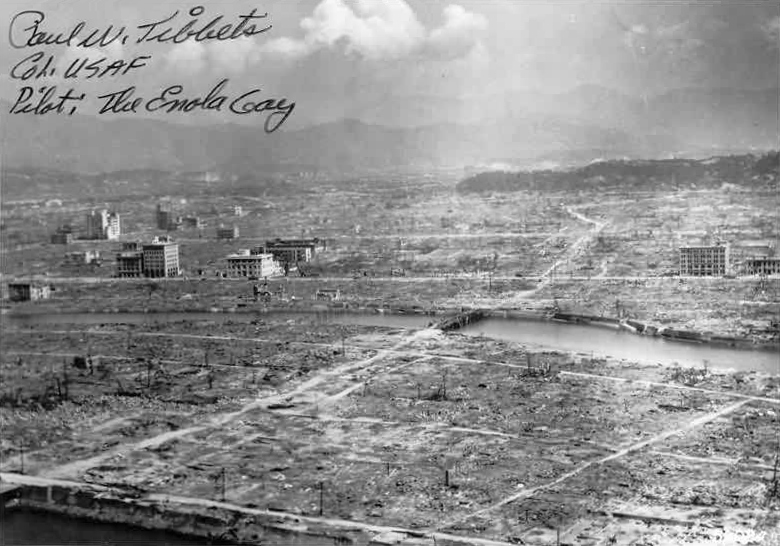
Vladimir Sorokin is known for his postmodernism fiction with contents enveloped in satire, Soviet life, and dystopian futures while touching base on every taboo within Russia. Starting his career as a writer in the 1970s, he has published over 50 literary pieces including but not limited to novels, plays, and short stories. Sorokin’s “Hiroshima” is no different. “Hiroshima” is meant to hold a connection to the atomic bomb tragedy on August 6, 1945 in the city of Hiroshima, where an American plane dropped the deadly weapon and caused the destruction of 245,000 residents' lives.
In this story we view the lives of five individual pairs, starting with Lukasherich (vice president of a bank) and Zeldin (owner of four supermarkets) who are engaging in bar hopping as they reminisce their past friendship. The second point of view comes from Valera (homeless man) and Rooster (homeless man) who live their days by collecting bottles to gain enough money to purchase beer and bread. We then are told about Alex (dancer) and Nikola (web designer) two men who partake in sexual activities while drinking and doing drugs. Our next retelling is of Niura (old lady) and Matryona (old lady) who are engaging in their normal prayers before having diner. The last story is of Rita (5 yr. old) and Masha (5 yr. old) the two children lay awake during night while the 16 other students are sleeping while the nanny and guard are having sexual activities. Though each story is told in different parts of Russia Sorokin provides the same times before 11:48 PM. While dates remain unknown, one can assume they are accounted on the same day as well. These retellings all end with each pair choking each other after consuming drugs, drinking, or conversation. Though it’s not the end of the story, Sorokin goes on to mention what each person saw while being choked: Lukasherich, Valera, Alex, Matryona, and Rita saw nothing while being choked by their partner. While Zeldin, Rooster, Nikola, Niura, and Masha all experienced seeing flashing colors in shades of oranges, reds, purples, and blues until seeing a burned city full of ash, with only one sole naked woman wandering until finding a pregnant dog on the verge of death trying to birth her puppies. The women help birth the pups, then picked up the puppies one by one for them to drink her milk.
At first reading, this story seems to have nothing to do with Hiroshima, though it’s inspired by the bomb. Sorokin’s intention for this piece of fiction is to find connections between the event and story. Sorokin doesn’t make these connections easily portrayed to those with limited knowledge of the event or bomb itself. Though to those with a deeper understanding it is possible to find similarities. Another intention could be just to take elements of the historical event and present them within this story to make the work more purposeful. With these possible intentions in mind let’s return to the main components of the work.
Sorokin places heavy emphasis on the physical action of choking, as well as what was seen or what was not seen during the process of choking. Sorokin chooses to end each retelling with a sentence about choking. In Lukashevich and Zeldin case after remembering fond times they turn against each other with intend to kill “You Moscow scumbag!" Lukashevich growled, and they started choking each other” (Sorokin 50). With the other stories Sorokin chose to end them with “They began choking each other” (Sorokin 51, 52, 54). In Niura and Matryona they let loneliness consume them towards suicide “The nooses tightened, and the old women’s legs gave away” (Sorokin 53) further proving that choking could mean different things. In Rita and Masha’s instance it is portrayed as making love while for others it meant giving up or an act of violence. Sorokin encourages the reader to look more profoundly into this action to portray that choking could also be a connection to how survivors possibly felt suffocated during the explosion while the smoke and ash were still thick in the air.
Though choking is the emphasized action, what is seen and not seen tells a greater deal. Each pair being split by who can see and who can’t, shows reactions or even death. Those who didn’t see anything could be a representation of those who lost their lives in the explosion, hence them seeing nothing. Those who all saw the exact same vision of colors, ash, and the sole women, are those who survived the accident and witnessed the collision of the bomb which most describe as bright colors in various shades of red, orange, blue, and purples. The grey dull city is picturing the remnants of the city during the aftermath. The sole naked women is a depiction of the alone sentiment, knowing that they only have themselves during this time and are struggling to find each other and rebuild what little is left of this city.
Vladimir Sorokin creates spaces in this text for deeper connection, though his intentions are difficult to understand through his cryptic texts to a general audience. Though to his intended audience of those who can interpret other texts in a deeper context his intention is to bring light to survivor's thoughts and create an homage to the people of Hiroshima.
Bibliography:
Sorokin, Vladimir. “Hiroshima - JSTOR.” JSTOR, Jean Stein, https://www.jstor.org/stable/pdf/25008633.pdf.
Wetzig, Elke. Vladimir Sorokin, Wikimedia Commons, 13 Mar. 2006, https://upload.wikimedia.org/wikipedia/commons/b/ba/Vladimir_sorokin_20060313-2.jpg. Accessed 31 July 2022.
Hiroshima in the Aftermath of the Bombing, U.S. Navy Public Affairs Resources Website, 6 Aug. 1945, https://upload.wikimedia.org/wikipedia/commons/a/a0/Hiroshima_aftermath.jpg. Accessed 31 July 2022.


This page has paths:
- Nuclear Texts José Vergara
