FALLOUT: When Nuclear-Apocalypse Becomes Reality
“War… War never changes. The Romans waged war to gather slaves and wealth. Spain built an empire from its lust for gold and territory. Hitler shaped a battered Germany into an economic superpower. But war never changes. In the 21st century, war was still waged over the resources that could be acquired. Only this time, the spoils of war were also its weapons: petroleum and uranium. For these resources, China would invade Alaska, the U.S. would annex Canada, and the European Commonwealth would dissolve into quarreling, bickering nation-states bent on controlling the last remaining resources on Earth. In 2077 the storm of World War had come again. In two brief hours, most of the planet was reduced to cinders, and from the ashes of nuclear devastation, a new civilization would struggle to arise. A few were relatively able to reach the safety of the large underground vaults. Your family was part of that group that entered Vault 13. Imprisoned safely behind the large vault door, under a mountain of stone, a generation has lived without knowledge of the outside world. Life in the vault is about to change.”
– Fallout 1
MEDIA: The Fallout video-game series
DEVELOPERS:
- Fallout 1: Interplay Productions
- Fallout 2: Black Isle Studios
- Fallout 3: Bethesda Game Studios
- Fallout 4: Bethesda Game Studios
- Fallout: New Vegas: Obsidian Entertainment
- Fallout 76: Bethesda Game Studios
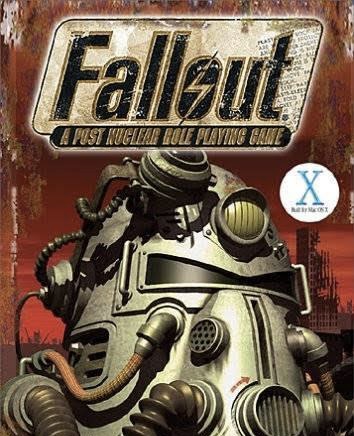
The Fallout series, created by Tim Cain and Leonard Boyarsky at Interplay Entertainment, started as a roleplaying video-game set in a post-nuclear-apocalyptic California. The player controls someone living in Vault 13 who becomes tasked with retrieving a water purification control chip, an item that manages the water system in the vault after the previous one becomes unusable. This quest has the player character go outside of the vault for the first time to explore the dystopian world. Throughout the game, the player encounters a diverse range of characters, mutant animals, organizations, and factions. Depending on the stats that the player chooses their character to have (ranging from charisma to pick-pocketing skills), the story can unfold in myriad ways. The Fallout games following the first one tend to follow a similar progression, with the player being tasked with an overarching quest while engaging with the story in their own way. Each Fallout game takes place in a different setting, either in the West or East Coast of the United States, adding layers of lore for the player to uncover regarding post-nuclear life.
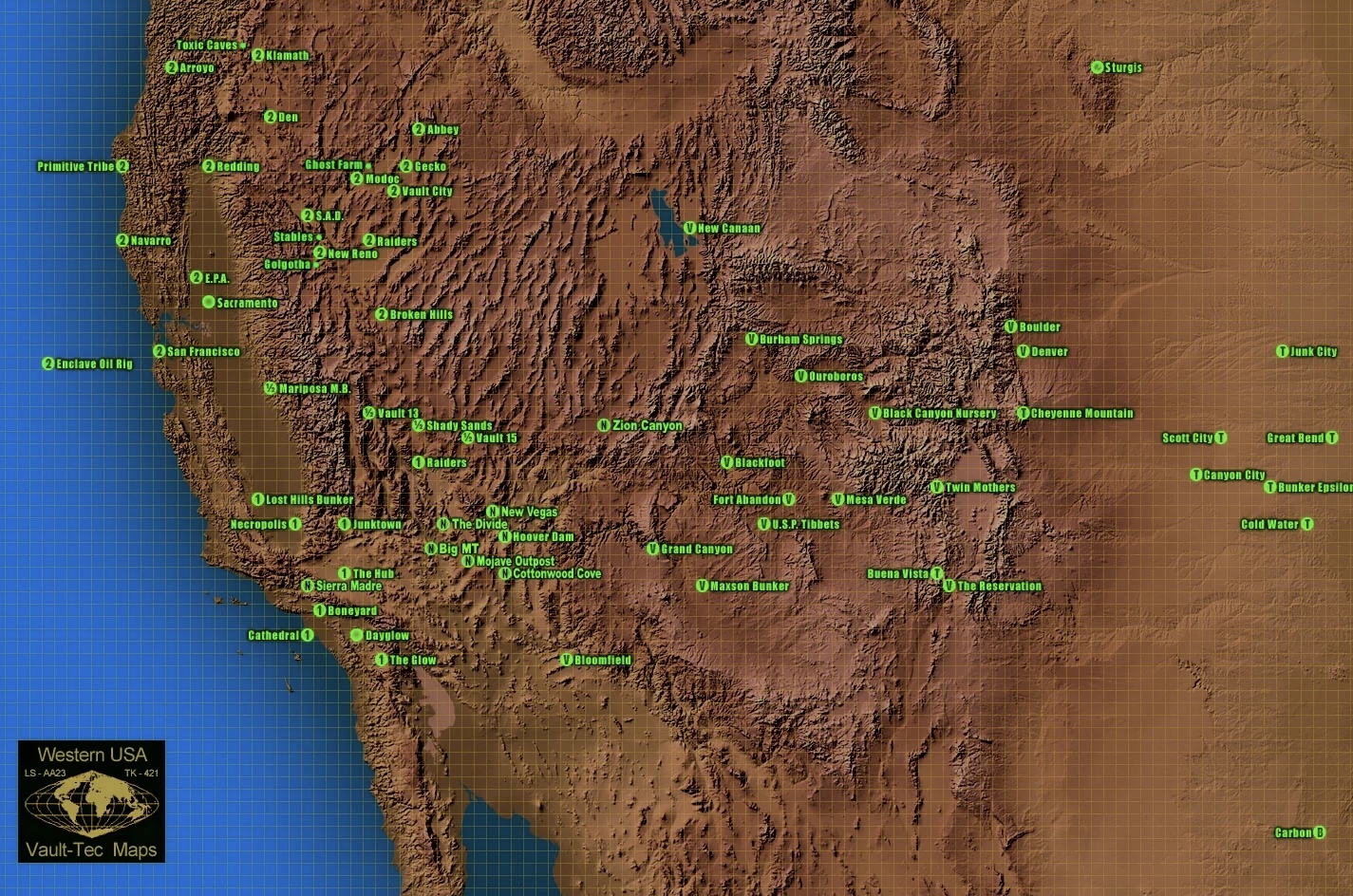
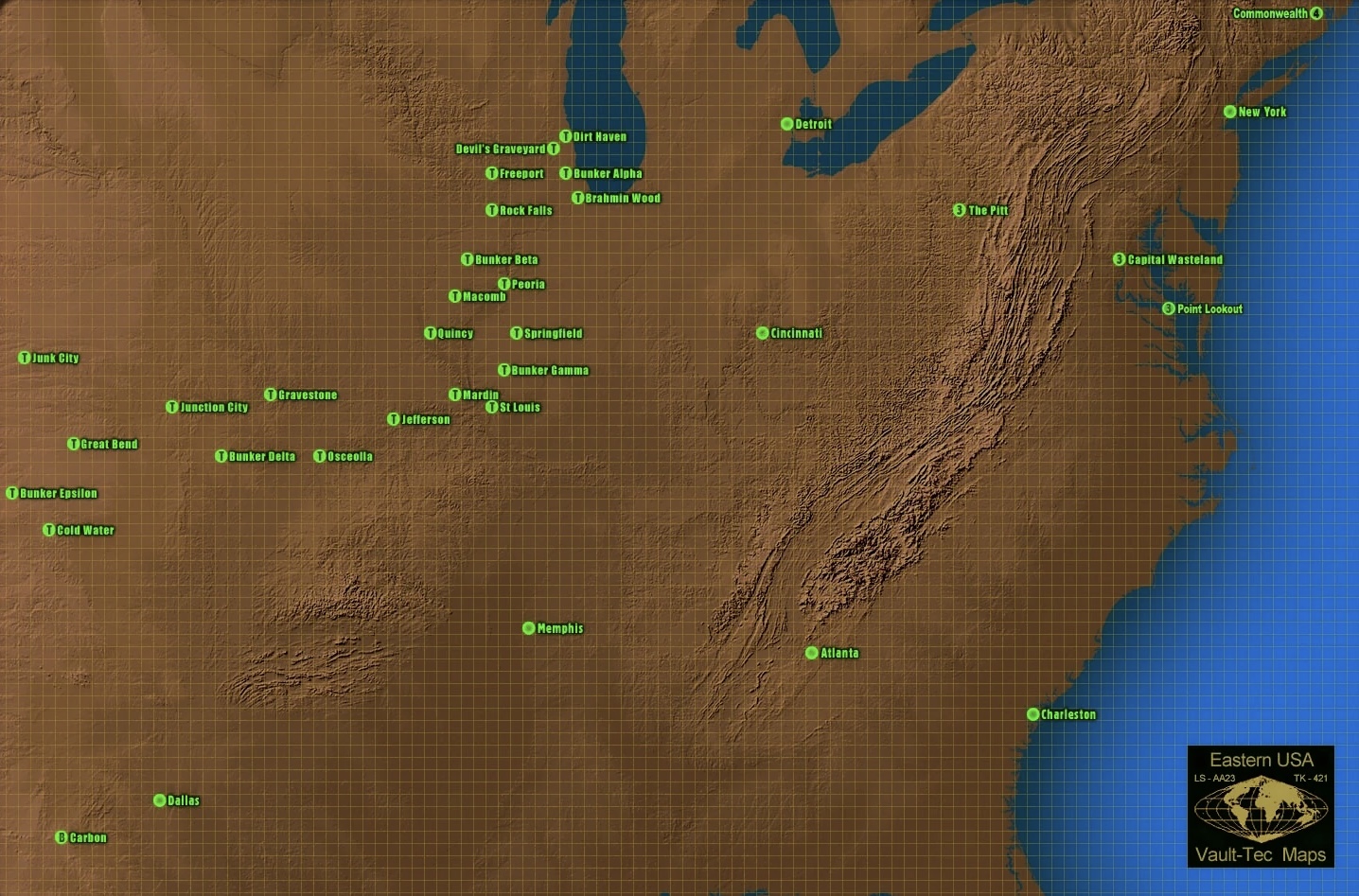
The setting for this franchise starts with the Great War (or World War 3). As petroleum and uranium became limited resources, geopolitical tensions rose as each superpower tried to acquire resources for themselves. These tensions, as well as advancements in nuclear fission and technology, led China and the U.S. into a nuclear war that nearly destroyed all of humanity. Vaults, created by the tech company VaultCorp, were made supposedly for the protection of roughly 4 million U.S. citizens from the catastrophic nuclear threat. From there, decades later, humanity attempted to rebuild itself in a diverse set of ways. Without there being a government, or a real sense of laws and leadership, brutality, and survivalism rose to an all-time high. Because of the nuclear fallout, the climate rose and many of the flora and fauna could not keep up with the rapidly changing environment, giving rise to mutations or new species of wildlife. This is the setting that the protagonists from each Fallout game find themselves managing.
ANALYSIS: CULTURE PRE-WAR AND THE AMERICAN DREAM
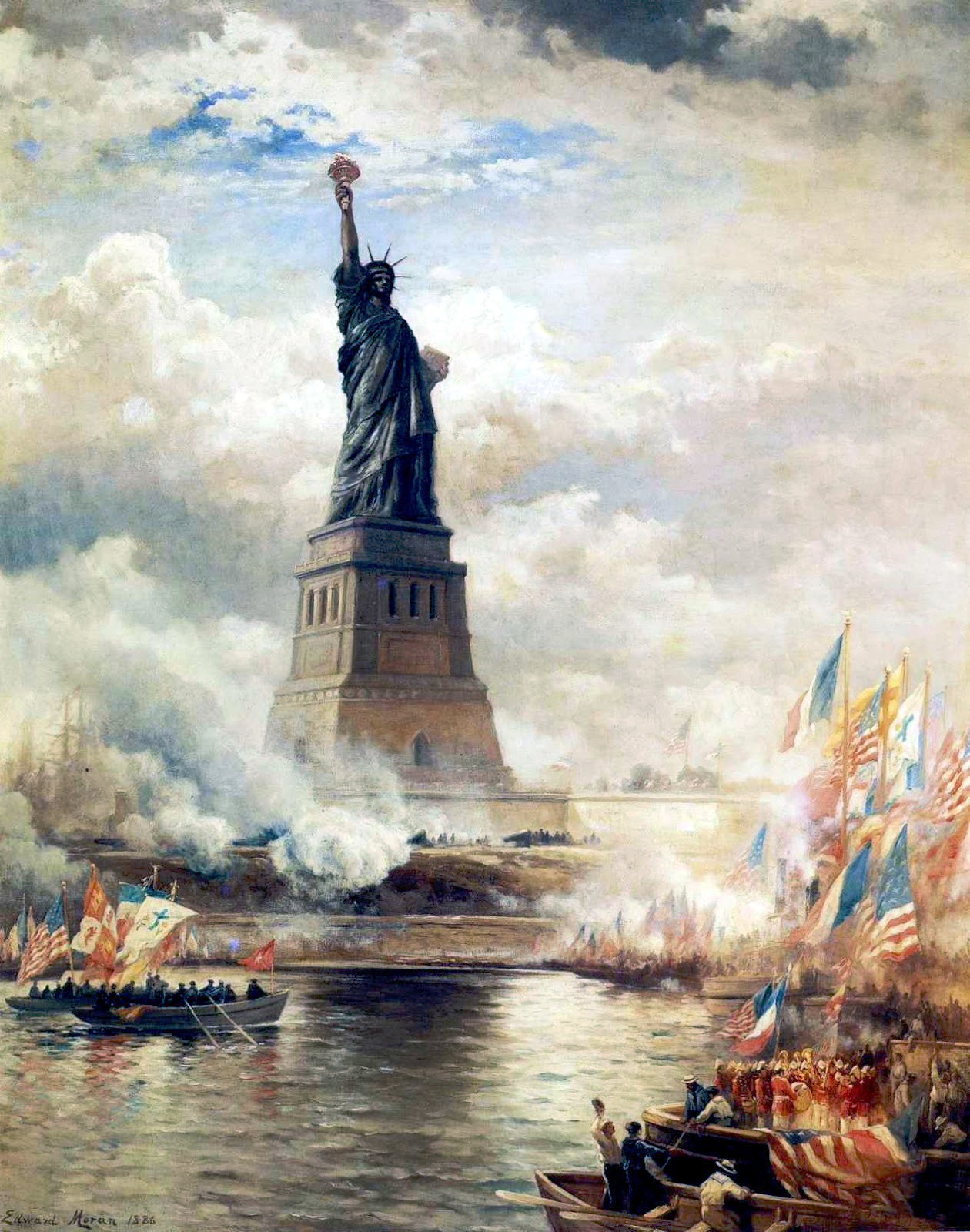
History in our world and the Fallout universe are the same up until the end of World War 2. The Fallout universe, from 1945 to 2077, is transfixed on a neo-futuristic image of the 1950s and the American Dream. This involves nuclear families, the housewife and the breadwinner, gender divide, black-and-white television, and more. The 1950s was also the time of the Atomic Age, where it was commonplace to have nuclear bomb blasts as tourist attractions and have media centured around atomic energy (Spider-man, Hulk, X-Men, and Fantastic Four, just to name a few). This initial fascination with atomic and nuclear energy drove American pride, especially after the attack of Pearl Harbour and the counterstrike of the bombings in Hiroshima and Nagasaki.
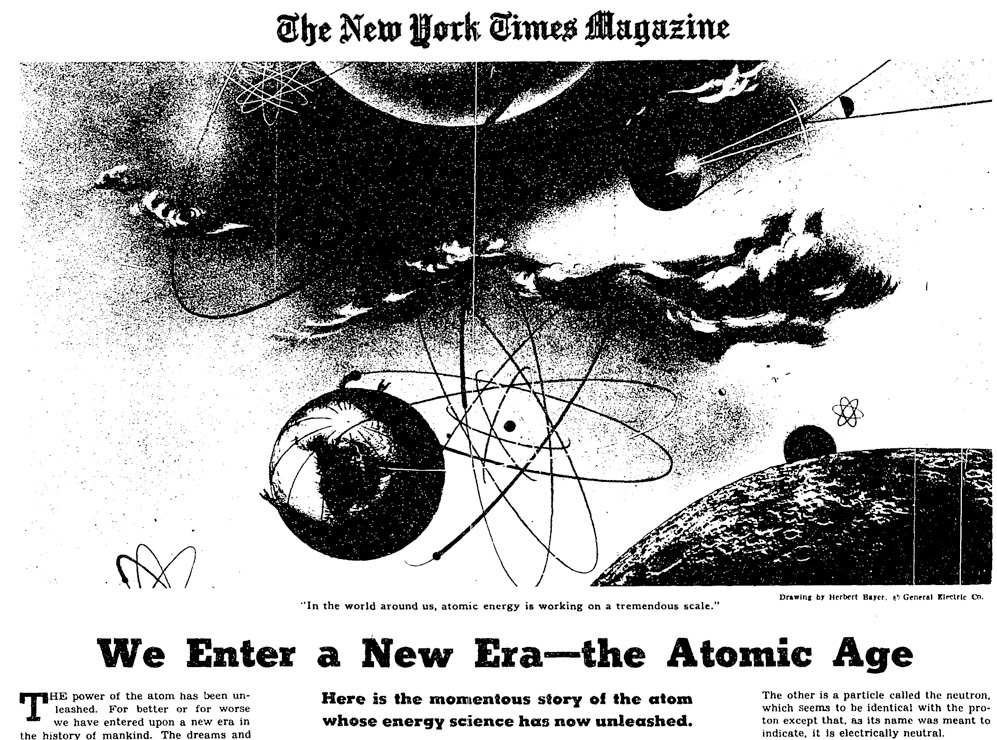
These facets of the 1940s to 1960s didn’t shift much in the Fallout universe. Following the 1950s, the U.S. focus shifted from atomic weapons to civil rights, and with the growing conflicts between the U.S. and the Soviet Union, the view of nuclear energy shifted from one of intrigue to one of fear. It is undeniable that war changes people, no matter which side a person is on, or what role they play during the war. With women, whose idea of work was traditionally seen in the home, shifting to jobs usually occupied by men, and with men themselves being on the front lines of the war, there is comfort to be seen in the “way things were.” More specifically, when people are pushed so far out of their comfort zone, they may desire for things to go back to the way they were. Drastic change is uncomfortable, and not often for the sensitive or faint of heart. While, following World War 2, gender roles and family structures returned to a traditional form because of this glorification of the past, it is possible that in the Fallout universe, it remained stagnant because of this fear of change. It is important to remember that a lot of the changes that shaped American society in the 1950s and 1960s resulted from protests for rights and equality, change that confronts the romanticised idea of the American Dream. Potentially the universe in the Fallout franchise remained transfixed in the 1960s because of this reluctance to embrace change, marred by the Second World War. Furthermore the Cold War happens much later in the Fallout universe than it does in our world (by about a hundred years), and the Cold War introduced to Americans the idea of fearing nuclear energy. Without the presence of the Cold War early on, for decades the Americans living in Fallout’s America were interested in nuclear energy (as well as petroleum).
SUMMARY: THE GEOPOLITICS PRE-WAR IN FALLOUT
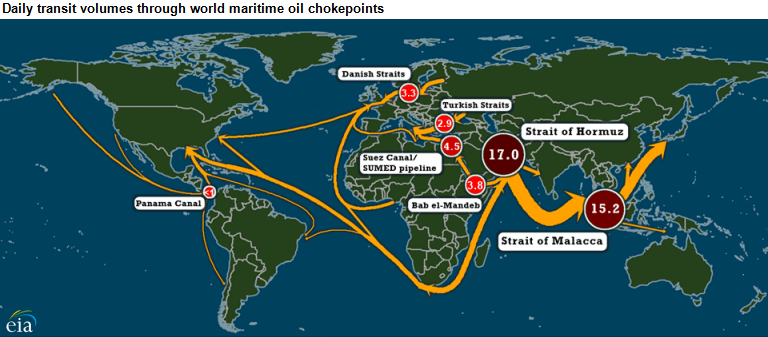
Petroleum and uranium are the leading resources for energy in the Fallout universe, being the driving reasons why geopolitical conflicts and global superpowers waged war against one another. Panic and greed over these resources ensued the downfall of humanity. While there was a huge demand for nuclear energy in the United States, petroleum persisted because it is not only the cheaper alternative but oil powered smaller vehicles, could be refined into several subsets of oil depending on carbon density, and provided a stronger sense of reliability considering the lack of information or knowledge about nuclear energy and fission. In the Fallout universe, aside from the United States, several other continents depended on oil, such as Europe and the Middle East. This dependency would only fuel (pun not intended) geopolitical tensions over the decreasing resource. As for nuclear energy, it was relied on just as heavily, especially in the United States as improving technology allowed scientists to experiment with the possibilities the energy source has. Because both are limited resources, the dependency created an unstable economy for these energy resources across the globe. Tensions for these sources of electricity and energy would initiate the Resource Wars, the first of many wars that would ensue over the rapidly decreasing resources. In 2051, the United States invaded Mexico, citing the reason as “political instability as a threat to national security”; however it was an attempt to exploit Mexico’s oil. Influenced by the United States, the European Commonwealth would respond in a similar fashion to the Middle East, using military force to secure new sources of oil. The war itself and the high oil demand caused the prices for the resource to increase exponentially, causing many smaller nations to go completely bankrupt, and the United Nations to completely dismantle. Only after the Middle East oil fields ran completely dry and the European Commonwealth dismantled did the Euro-Middle Eastern conflicts come to a close. The situation would only become more dire from there, as the United States closed its borders in a desperate measure to stabilize its economy. Oil soon became commodified to an extent where it was no longer offered to the average person and vehicular traffic came to a halt as gasoline was no longer being provided to American citizens. Attempts to use nuclear energy as an alternative for citizens came too late, and most of that energy was then weaponized against China in the Sino-American War for the same resource shortages. During these times came a period similar to what we would consider a Cold War in that it was the capitalistic United States against communist China. The Cold War in our universe introduced the possibility to Americans of being paranoid of nuclear destruction, as well as the fear of communism (Red Scare). Those themes, especially the latter, are reflected in some of the propaganda posters scattered throughout the Fallout games. These conflicts (including the annexation of Canada), would lead to the ultimate destruction of humanity.
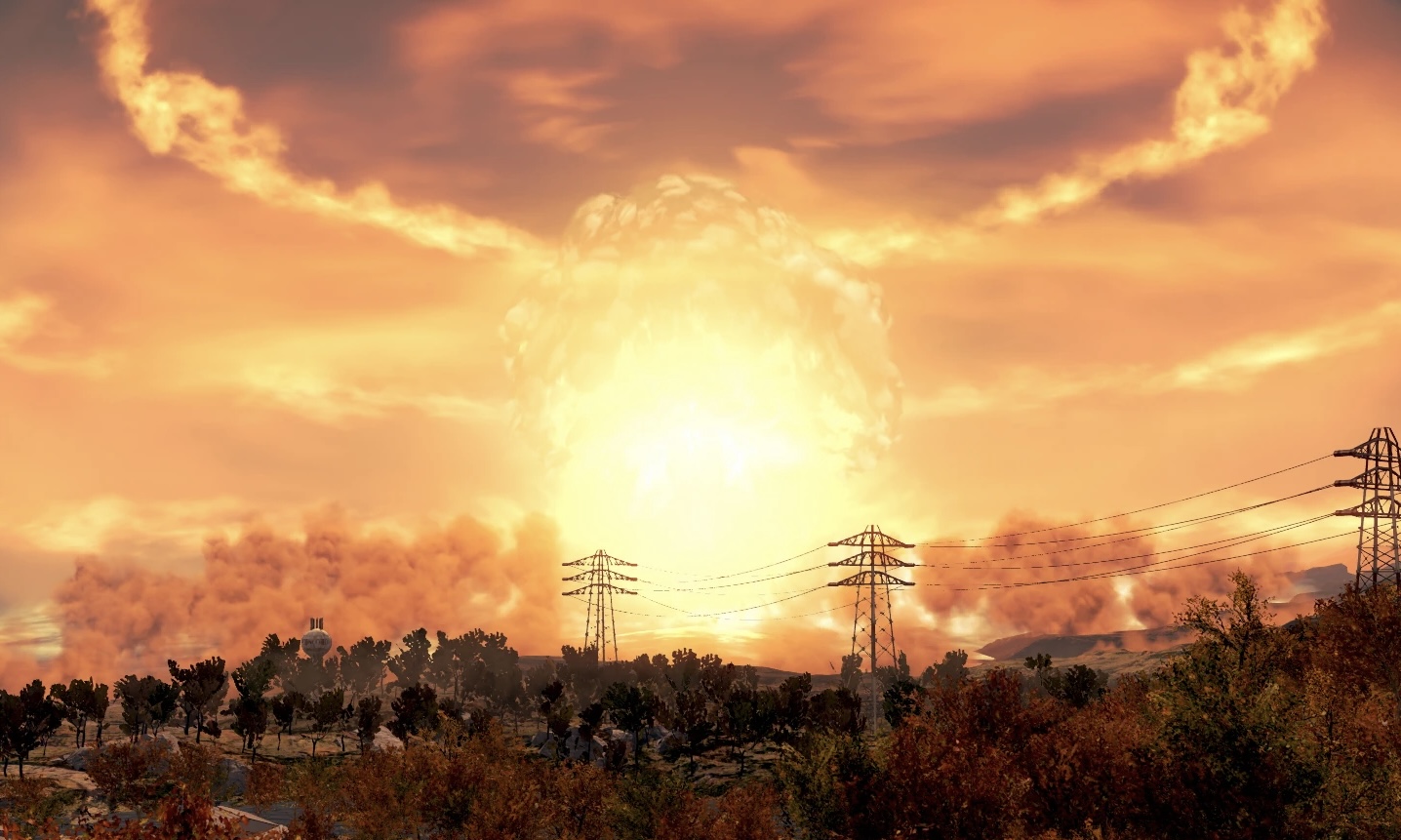
ANALYSIS: THE GREAT WAR AND ITS GLARING PARALLELS WITH MODERN GEOPOLITICS
These conflicts, while fictional, pose a terrifying possibility for our world if we keep depending on coal and oil as our main energy resources. While not mentioned explicitly in the Fallout universe, the consumption of oil and coal for electricity and energy has led to an ever-increasing climate (climate change), and its effects have already begun to be felt. Temperatures throughout the United States keep increasing, sometimes exceeding 100 degrees Fahrenheit. The flora and fauna of the world have also struggled with the rapid increase in pollution and climate, with species nearing extinction or total habitat loss. As for geopolitical relations over oil, there is a ton of inflation already occurring in the oil market in the United States. The United States, as of writing this (July 31st, 2024) has produced the most crude oil than any other nation. Despite former President Biden promising to take action against climate change, the actions of the U.S. in softening relationships between Iran, Saudi Arabia, and in Venezuela in order to perhaps get more oil, it seems that the resource is still a hot topic for U.S. foreign relations. As it stands, Donald Trump promises to make America enter a new age in oil production, hoping that America produces enough oil to "supply the rest of the world," while Kamala Harris had previously been outspoken about a fracking ban in the U.S., it seems she has backtracked on that statement, which goes to prove how prevalent oil is in the world of politics. Oil has been a leading cause of war and petro-aggression, and is increasingly becoming the cause of political tensions. In real time the connections between the fictitious world of Fallout and the real world become more and more prominent.
ANALYSIS: PROPAGANDA AND THE SHIFT TO FEARING NUCLEAR ENERGY
Shifting from a geopolitical level to a personal level, oil-based propaganda is nothing new to our world. The infamous Canadian Ethical Oil Campaign by Alykhan Velshi is just one of many examples of how different areas of politics intertwine with oil for propaganda. Similarly, in the Fallout universe, propaganda was used for the recruitment of soldiers for the various wars for resource control, as well as support in other aspects of life (i.e., VaultCorps). What is fascinating regarding propaganda in Fallout is not only the propaganda itself but how people react to it. The propaganda itself promotes nationalism, pride, and communism fears. Yet, in some of the games, the player character has the opportunity to see what is written on top of these posters, messages that convey a general distaste for the message the propaganda posters share. These negative messages in reaction to the propaganda seem to reflect the dissenting attitudes of the American people. It was mentioned earlier that the concept American Dream and the fascination from the Atomic Age lingered for much longer in the Fallout universe than in our own (especially with the absence of a Cold War shortly after the conclusion of World War 2). The shift from a positive to a negative attitude toward these resources resulting the war caused by the resource shortages parallel with our universe as the people grew to fear nuclear energy, the same nuclear energy that the American people were so prideful and patriotic about.


This is one of the many ways that the series of wars that ensued in the Fallout universe began to change people, even before the apocalyptic conclusion of the Great War.
SUMMARY: THE FACTIONS
One of the most notable characteristics of the Fallout games that the player gets to experience is the numerous factions that patrol certain parts of the story. These factions are characterized by their ideologies, their goals, and their actions throughout the story. While there are more than 30+ different factions and mini-factions spanning all of the Fallout games, there are a few prominent factions that either reoccur in different games or have a significant contribution to the overall story of Fallout.
SUMMARY: FACTION 1 - THE UNITY
The Unity was a faction created by the antagonist of Fallout 1: the Master. Originally Richard Grey, he was considered an excellent doctor and philosopher, someone who went on an expedition with several other humans to try to put an end to mutant (beings who mutated due to nuclear radiation) attacks on innocent civilians. The expedition led Grey and his team to discover an old military base: the Mariposa Military Base.
For context, this was a military base used by the United States during the Great War to test and experiment with the Forced Evolutionary Virus (FEV), a virus that can forcibly change the genotype and phenotype of any being. Originally called the Pan-Immunity Project, this mutagen was created by the United States and was forcibly tested on military prisoners for the United States to get an upper hand against China, hoping that the forced evolutionary change would make the prisoners superhuman. This project backfired, however, as the prisoners were found to be mentally inept and the project was abandoned following the nuclear apocalypse. The military base, following nuclear destruction, found itself occupied by various creatures, who when exposed to the FEV, became mutants.
In the case of Dr. Richard Grey, it was not the mutants in the Mariposa military base that posed a threat, but the automated security system that would bring about his end (as Dr. Richard Grey). A moving crane had smashed into the doctor and caused him to fall into a vat containing mass amounts of the mutagen. After becoming mutated, the doctor realized that his intellect was growing exponentially, and neuro-linked himself to a computer, becoming The Master.
With his new form and intellect, the Master created the Unity and went about his plan to use the FEV virus to create a new species of super-humans, destroy the other humans (which were marred by war and threatened the goal of unity), and to unite the new era of humanity together, effectively erasing possibilities of disagreements, conflict, violence, and war.
The Unity, though prominent only in Fallout 1, created a lasting impact throughout the rest of the games, with mentions made to the Master and his faction scattered throughout the games. Though extremely flawed, the Master embodies a desire for humanity to be one, united.
“Of course. Mutants are best equipped to deal with the world today. Who else? The ghouls. Please. Normals. They brought nuclear death to us all. This will be the age of the mutants. Mutants.”
– The Master, Fallout 1
SUMMARY: FACTION 2 - THE BROTHERHOOD OF STEEL
The Brotherhood of Steel is one of the most prominent factions in all of the Fallout franchise, playing a role in nearly every game. They are characterised by their military prowess and hoarding of pre-war technology. The faction was founded by Roger Maxon, a captain of the U.S. military stationed at the Mariposa military base who became disillusioned with how the United States used technology, especially with the creation and use of FEV. Shortly after the war, it became Maxon’s mission to not only hoard all of the pre-war technology, to prevent the wrong people from utilizing it and creating more conflict but also to enforce order through militaristic means. Maxon firmly believed that the United States had misused their technology and failed to protect its civilians, a belief shared by fellow members of the Brotherhood of Steel. This belief would shape Maxon’s dedication to educating the BoS members on human technology and knowledge, shaping them to become protectors and guardians for those in need. Even though the Brotherhood of Steel had seen some ideological shifts as its leader switched from one person to the next, it is notoriously known to maintain the virtues of honor, truth, and courage.
SUMMARY: FACTION 3 - CAESAR'S LEGION
The last faction mentioned here is the Legion, or Caesar’s Legion. Most prominently in Fallout: New Vegas, this faction has created quite an impact for its intense ideologies and regimens. Created by Edward “Caesar” Sallow and Joshua Graham, the former found great fascination with recovered history books that detailed Roman history, especially Julius Caesar’s rule. This intrigue with Roman history would shift into a romanticization as Sallow, with the help of the Mormon missionary Joshua Graham, would form Caesar’s Legion. Hellbent on totalitarian dictatorship, Caesar’s Legion was infamous for rejecting pre-war advanced technology, instead basing battle strategies on Roman fight tactics, forcibly enforcing uniformity amongst its members, who had to abandon any aspect of themselves that differed from the faction’s ideals, and for its strict gender roles in which women would have submissive roles. In contrast, men had to take on a dominant role. Deluded by the belief that enforcing everyone to become the same in terms of ideals and beliefs would put a stop to all conflicts post-nuclear-war, some of the atrocities this faction has committed in the name of this belief include forced crucifixions (paralleling the Christian narrative of the Romans crucifying Jesus), culture assimilation, and slavery.
ANALYSIS: THE FACTIONS AND THE FAILURE OF THE AMERICAN DREAM
- Can humanity truly be united?
The various factions in the Fallout series not only are evocative of humanity’s struggle to truly be united and uniform as a species, but also the stark contrast between the survivalism and brutality of the factions compared to the supposed comfort and security of American Dream-esque society pre-war shows the failure of the American Dream. The American Dream is based on the idea that every individual in the United States, regardless of circumstances of birth, has an equal opportunity to their peers to pursue happiness. This idea is flawed for many reasons but is exemplified in Fallout through extremist means. Each faction has its own set of ideals and goals, whichever faction a person is a part of speaks to the things they crave most. It was already discussed how the Brotherhood of Steel believed that the U.S. government had failed to utilize its technological advancements to protect humanity, therefore they believed that by hoarding as much pre-war technology as they could get their hands on, they would do a better job of protecting their citizens than their government. There is a desire to protect others, but only under controlled circumstances. There is an essence of survival of the fittest that emanates from the post-war United States, as it becomes clearer as the player transverses through the landscape that certain areas are controlled under certain factions, factions like Caesar’s Legion take advantage of weaker people to either control them or crucify them if they do not comply. In scenarios where there is complete lawlessness in the land, as such with the destabilization and loss of power of the United States government post-Great-War, the real priorities of people come to shine. Some factions are based on helping other people, factions are dedicated to eradicating the current species of humans, and there are factions based on individual survival and brutality. In this apocalyptic world, equality does not exist. A person does not have the same opportunities as their peers, they have to become stronger if they hope to survive and not be controlled by another faction. This disparate inequality contrasts heavily with the idealized American Dream, and the inherent lawlessness that drives a person’s true desires and priorities demonstrates how such an idea was bound to fail with a species as complex as humans.

ANALYSIS: ENERGY AND RESOURCE SWITCH FROM PETROLEUM AND URANIUM TO WATER AND HYDROELECTRICITY
- Would it take a nuclear apocalypse for our world to stop using harmful energy sources?
Apart from mutagens and technology, factions throughout the Fallout series also focus on water as a much-needed resource. The protagonist of Fallout 1 originally sets forth on their quest because the vault they were in did not have a working water chip, and without one everyone in the vault would eventually die of dehydration. In Fallout 2 the Arroyo community suffers from a drought and the protagonist is sent on a quest to retrieve a Garden of Eden Creation Kit (GECK), a kit that allows one to create a thriving populace of flora and fauna, to restore their homeland. In Fallout 4 there are a few mentions of the Project Purity Initiative to create a water purifier capable of purifying the radiation out of available water. In Fallout: New Vegas the actions of the various factions in the game are based around control of the Hoover Dam for electricity. This shift from using oil and uranium for energy to hydroelectricity does suggest a shift from using destructive energies to using more renewable and less costly energy. Fallout questions whether or not humanity is capable of switching completely to clean sources of energy that do not have harmful emissions until the harmful forms of electricity bring about humanity's destruction, a true example of hubris and shows how reliant the United States has become on oil and nuclear power.

CONCLUSION
There are many aspects of the Fallout series to be analysed, however, the central message of this series seems to be focused on the greed of humankind and whether or not we are worth saving. Greed is what drove the United States and China to deploy nuclear weapons against each other, officially concluding the Great War and leaving the world in a nuclear apocalypse. Such conflict that is not too far from our own reality, conflict that has already manifested in different ways. Greed is what drives factions into devising their ways to process the events of the Great War, either believing that they have what it takes to unite humanity or giving up entirely and seeing humans only trivial to advance their agendas. The conflicts between humans did not stop with the Great War, in fact, they only increased, not only showing the disparity and untruths of the American Dream that seemed ever so pervasive in the United States pre-war, but also begging to question whether or not the conflict between humans can ever end, if violence is our birthright as humans. The American Dream already saw itself start to crumble away as American citizens became less trusting of the United States government through responses to the propaganda, and the aftermath of the Great War and the lawless land it created was the straw that hit the camel’s back for the total annihilation of the American Dream, proving how flawed the ideal is. The absolute gem that sets Fallout apart from other video games is that it is entirely up to the players to decide that for themselves. The player can choose who gets to live and who dies. The player can choose whether or not they want to save humanity or take an active role in officially ending the current species of humans for good. The player can decide to join a faction and represent its ideals or to be a lone wolf. The player drives the plot, and it is up to them to answer the question of humanity being worth saving. While the Fallout video-game universe is fictional, it does question the dangers of overreliance on harmful energies that threaten to destroy our planet, as well as what it really means to be human and to take charge over our destiny.
BIBLIOGRAPHY
This page has paths:
- Fallout (2024) - Prime Video Show José Vergara
- Nuclear Texts José Vergara

Contents of this path:
This page references:
- The west coast in Fallout
- FALLOUT (Factions of the Apocalypse & Entire Game Series Lore) EXPLAINED
- Fallout - The Master
- "Fallout" Intro
- An Introduction To The Brotherhood Of Steel | Fallout
- Caesar Explains Himself
- The east coast in Fallout
- Project Purity Initiative
- Fallout 1
- Symbols of various factions in Fallout
- Unveiling the Statue of Liberty
- Negative reaction to propaganda
- The Great War
- Pro-U.S. Fallout propaganda
- A magazine detailing the start of the Atomic Age
- Anti-Communist news article from Fallout
- Daily transit volumes through world maritime oil checkpoints
- "I Want You" war propaganda poster


