Hold Your Breath Until the Future Comes
About the Author
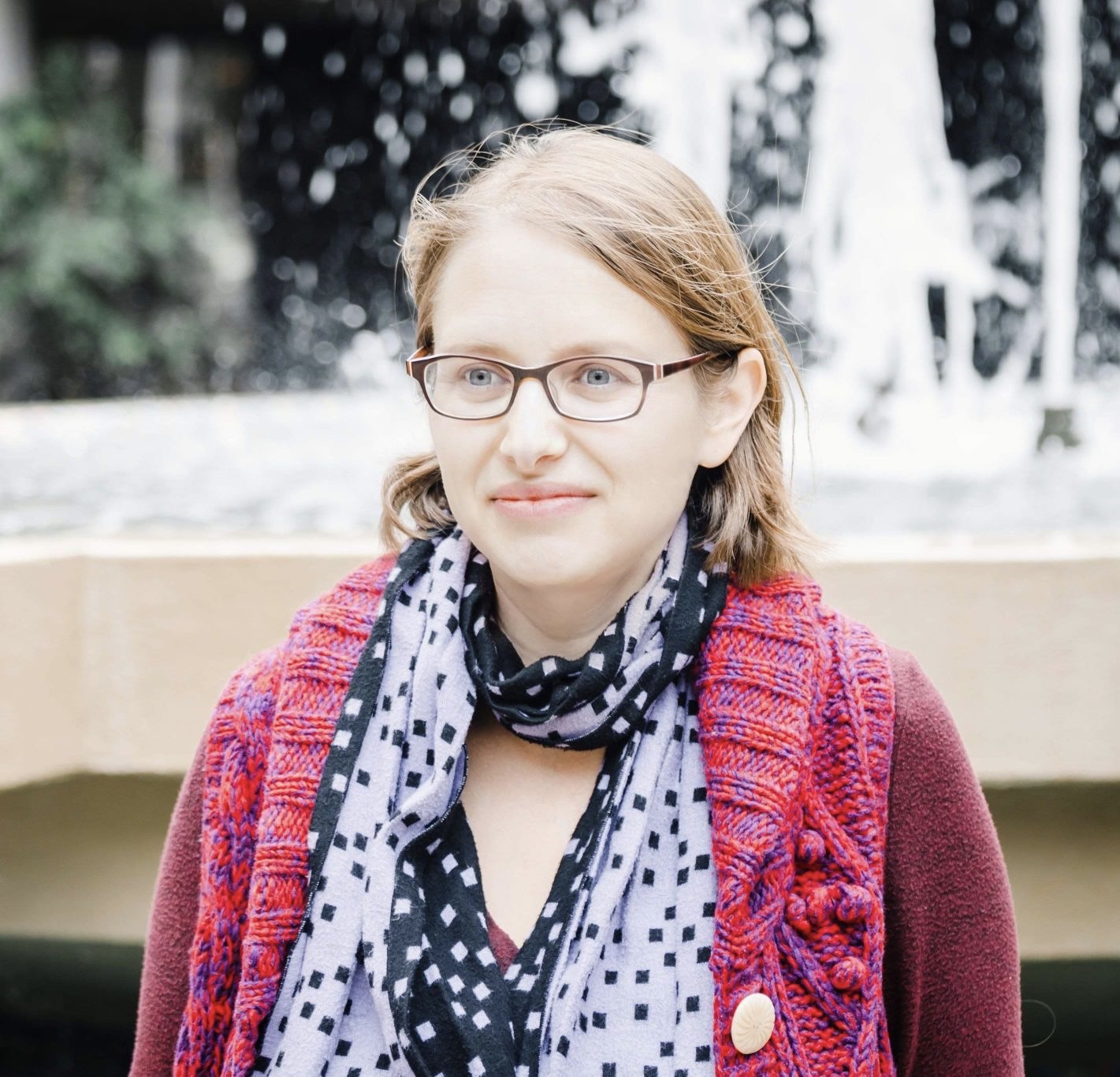
Olga Zilberbourg is a bilingual author and writer who has published works in both Russian and English. Some of her notable works include Like Water and Other Stories and Задержи Дыхание (Hold Your Breath). Born in 1979 in Leningrad, present-day St. Petersburg, Russia, to Jewish-Russian parents, Zilberbourg moved to the United States after graduating from high school to pursue her education at the Rochester Institute of Technology. She currently resides in San Francisco with her husband. Learn more about Zilberbourg. "Hold Your Breath Until the Future Comes"
On a hot, humid day in Brooklyn, Nadya struggles to balance the responsibilities of being a new mother while her parents pay an unexpected visit. With medical backgrounds, her parents check on her newborn baby, Anton, giving Nadya a rare moment to herself to take a shower. During this brief respite, she reminisces about her own childhood in the isolated town of Severniy in Northern Russia, where her parents, an endocrinologist and an ER doctor, were assigned to prepare for nuclear war. After enduring challenging conditions, they eventually moved to Murmansk and later emigrated to the United States.
Upon exiting the shower, Nadya finds her parents on the phone with her brother, Feliks, who has returned to Murmansk to pursue yoga. Though they were close during their childhood near a shipyard for nuclear submarines in Severniy, their relationship has since become strained. Feeling her small apartment starting to overheat, Nadya decides to take Anton for a walk to the park and accompany her parents to the train station. During the walk, she faces difficult conversations with her parents, feeling the weight of their expectations.
After dropping her parents off, Nadya impulsively decides to head to the beach with Anton. Despite realizing she is unprepared for the outing with a one-month-old, she tries to relax and recalls a childhood memory of her mother taking her to the beach in Latvia. She had hoped that having Anton would alleviate her feelings of loneliness and impending doom, but those feelings persist. As the temperature cools down, Nadya reflects on her childhood around nuclear energy and begins to breathe and contemplate the future.

Severny is the settlement serving Russia’s nuclear weapons tests, nowadays in the form of sub-critical experiments taking place deep inside tunnels in the permafrost mountains. The last real detonation of a nuclear warhead was on October 24, 1990. (Nilsen)
Analysis
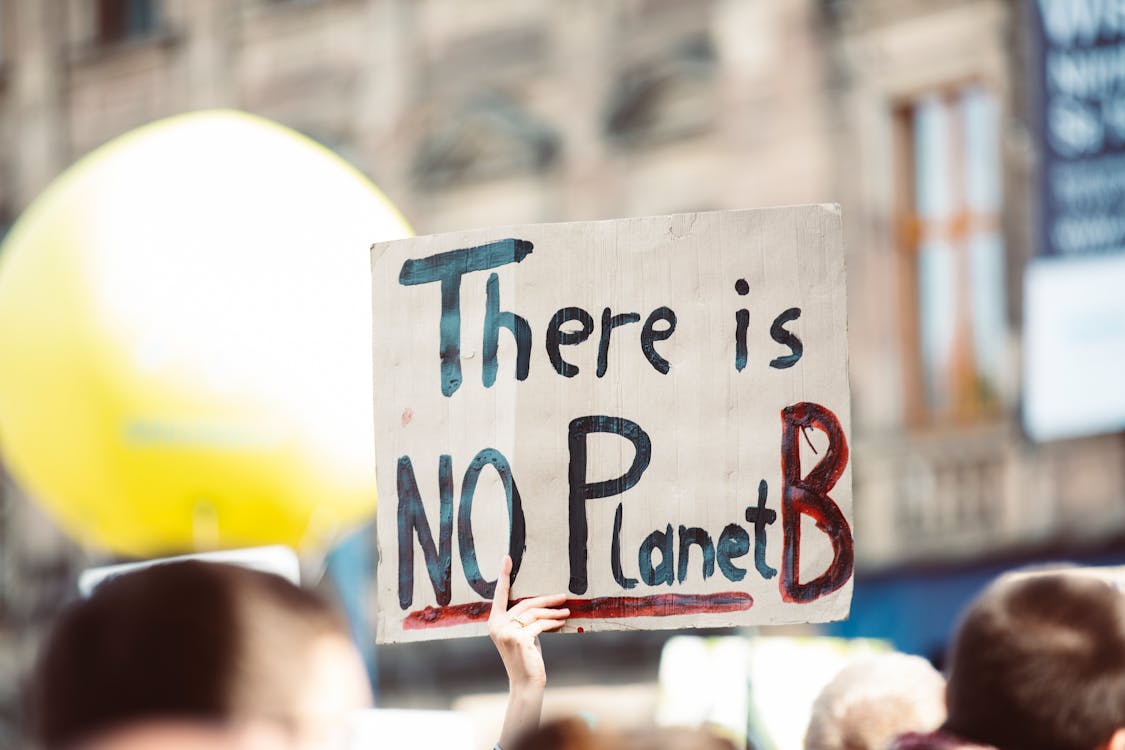
In Zilberbourg’s "Hold Your Breath Until the Future Comes," the choice to set this story on a hot and humid day in Brooklyn, where going outside feels like entering a sauna, highlights the issues of climate change that shape modern life. Stuck in a small apartment with a broken air conditioning unit, Nadya reflects that she and her son, Anton, “are bearing the brunt of the global warming” and that “there’s nowhere to run” (Zilberbourg 1). Zilberbourg’s choice of the word “brunt” emphasizes the magnitude of the heatwave they are experiencing. With the addition of the second statement, she suggests that not only is there nowhere for Nadya to escape the heat, but there is nowhere for humanity to run if we continue to damage our Earth. Nadya also reflects that “the rising ocean temperatures and water levels are the only truth that matters” (Zilberbourg 7). This statement highlights that, despite technological advancements, the reality of our environment is dictated by changes in nature. Humanity has been given resources by Earth to thrive, but those same resources have been used for our own demise.
Throughout the short story, Zilberbourg emphasizes the relationship between humanity and Earth through the mother-baby relationship between Nadya and Anton. Agitated by the heat and constant cries, Nadya views Anton as a “time bomb” (Zilberbourg 4). Additionally, Nadya notes that, for Anton, she is just a source of energy, and “he doesn’t care about [her] feelings,” feeding with such intensity that “he’s trying to grow from a baby into a man in one night” (Zilberbourg 16). Similarly, humanity often forgets to be grateful for the resources Earth provides. Instead of showing gratitude, we take more and more, rushing to compete amongst ourselves. The resources Earth provides are finite, and when they run out, the time bomb will go off.
On a side note, when Nadya's parents visit Anton, they tend to check his vitals and if he has any health complications. Although this may stem from their medical background, it could also be due to their awareness of the chemicals they have been exposed to while living in Severniy. A pregnant woman who was in contact with the radiation from the Chornobyl explosion was healthy, but her baby died due to the absorption of the radioactive shock (Alexievich 21). This raises the question: do Nadya's parents suspect that the baby may be sick due to exposure to radiation, particularly radon?
Lastly, Nadya’s childhood spent around a shipyard of nuclear submarines, with the constant threat of a nuclear war, has impacted her life trajectory. Nadya has developed nightmares long after her time in Severniy; every time she is transported to that place, she begins suffocating and gasping for air. Growing up in such an environment, Nadya has developed feelings of “loneliness and impending doom” (Zilberbourg 7). Living in constant fear of nuclear energy, Nadya has pre-conditioned herself to expect the worst of the environment and humanity and its “determination to destroy ourselves and the very planet we live on” (Zilberbourg 7). Through Nadya’s experiences, Zilberbourg highlights the impact of nuclear energy on perspectives and personalities. Both Nadya and Feliks have been impacted by their childhood and now believe that “people are ruining the planet” (Zilberbourg 9). The constant threat of nuclear energy forced them to grow up early and understand the true nature of the human race.Conclusion
In Hold Your Breath Until the Future Comes, Olga Zilberbourg examines the interconnectedness of personal history, environmental crisis, and human nature. Through Nadya’s experiences and reflections, the story highlights the prevalent impact of climate change and the lingering trauma of growing up under the threat of nuclear war. Zilberbourg explores topics of family, motherhood, childhood, and their connections to energy humanities (recommended read: Energy Humanities edited by Dominic Boyer and Imre Szeman), weaving these issues into an engaging narrative about a family who immigrated to New York from an off-grid town in Northern Russia. The parallelism of a mother taking her baby to the beach wraps up the story and signifies a turning point for Nadya to finally take a breath. The story urges the audience to reflect on humanity's relationship with the environment and the use of Earth’s resources. Nadya's journey serves as a powerful reminder of the resilience required to face an uncertain future and the importance of nurturing both our planet and our personal connections. Bibliography

Alexievich, Svetlana. Voices from Chernobyl: The Oral History of a Nuclear Disaster. Translated by Keith Gessen.
Doe, John. Nature Landscape. Pexels, https://images.pexels.com/photos/2990650/pexels-photo-2990650.jpeg?auto=compress&cs=tinysrgb&w=1260&h=750&dpr=1.
Lott, Joshua. Once Upon a Mine: The Legacy of Uranium on the Navajo Nation. Waste outside an abandoned uranium mine on the Navajo Nation, Cameron, Arizona. © Joshua Lott, https://drive.google.com/file/d/1lUQTSG3sMtXOzyIZwIFEnk_WL1_9UEK_/view.
Ministry of Defense of Russia. Russian Arctic Military Base Northern Clover (1).png. 5 Apr. 2019, Wikimedia Commons, https://commons.wikimedia.org/wiki/File:Russian_Arctic_military_base_Northern_Clover_(1).png.
Nabi, Gulsum. Photograph of Olga Zilberbourg.
Nilsen, Thomas. "Nuclear Waste Ship Makes Port Call at Novaya Zemlya." The Barents Observer, 27 Sept. 2023, https://thebarentsobserver.com/en/nuclear-safety/2023/09/nuclear-waste-ship-makes-port-call-novaya-zemlya.
Schwen, Daniel. Brighton Beach, New York City. 28 May 2008, Wikimedia Commons, https://upload.wikimedia.org/wikipedia/commons/5/55/NYC_Brighton_Beach_2.jpg.
Smith, John. Cityscape at Night. Pexels, https://images.pexels.com/photos/295726/pexels-photo-295726.jpeg?auto=compress&cs=tinysrgb&w=1260&h=750&dpr=1.
Turygina, Alina. “Olga Zilberbourg: An Interview for ‘Slavic Immigrant Artists in the Northwest.’” YouTube, YouTube, 7 Dec. 2023, www.youtube.com/watch?v=zMtyrgr3Xr0.
Zilberbourg, Olga. "Hold Your Breath Until the Future Comes." The Bare Life Review, vol. 4, 2021, pp. 8-28. by Daiana Azim
This page has paths:
- Nuclear Texts José Vergara
