Oppenheimer: An American Icarus
Author
Christopher Nolan is a British-American film director. He was born in London on July 30, 1970. Some of his other films include Dunkirk and Interstellar. His work is highly visually moving and often touches on theoretical sci-fi. The tone of his movies is often quite bleak, and many of his movies have interesting and nonlinear or complex timelines.
Summary
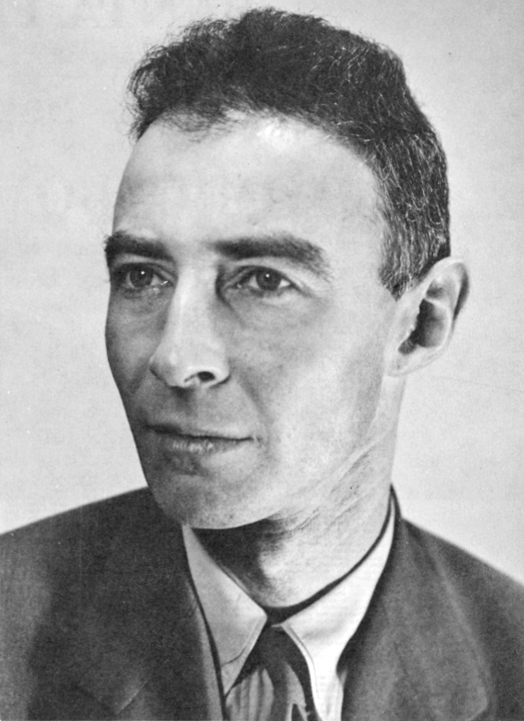
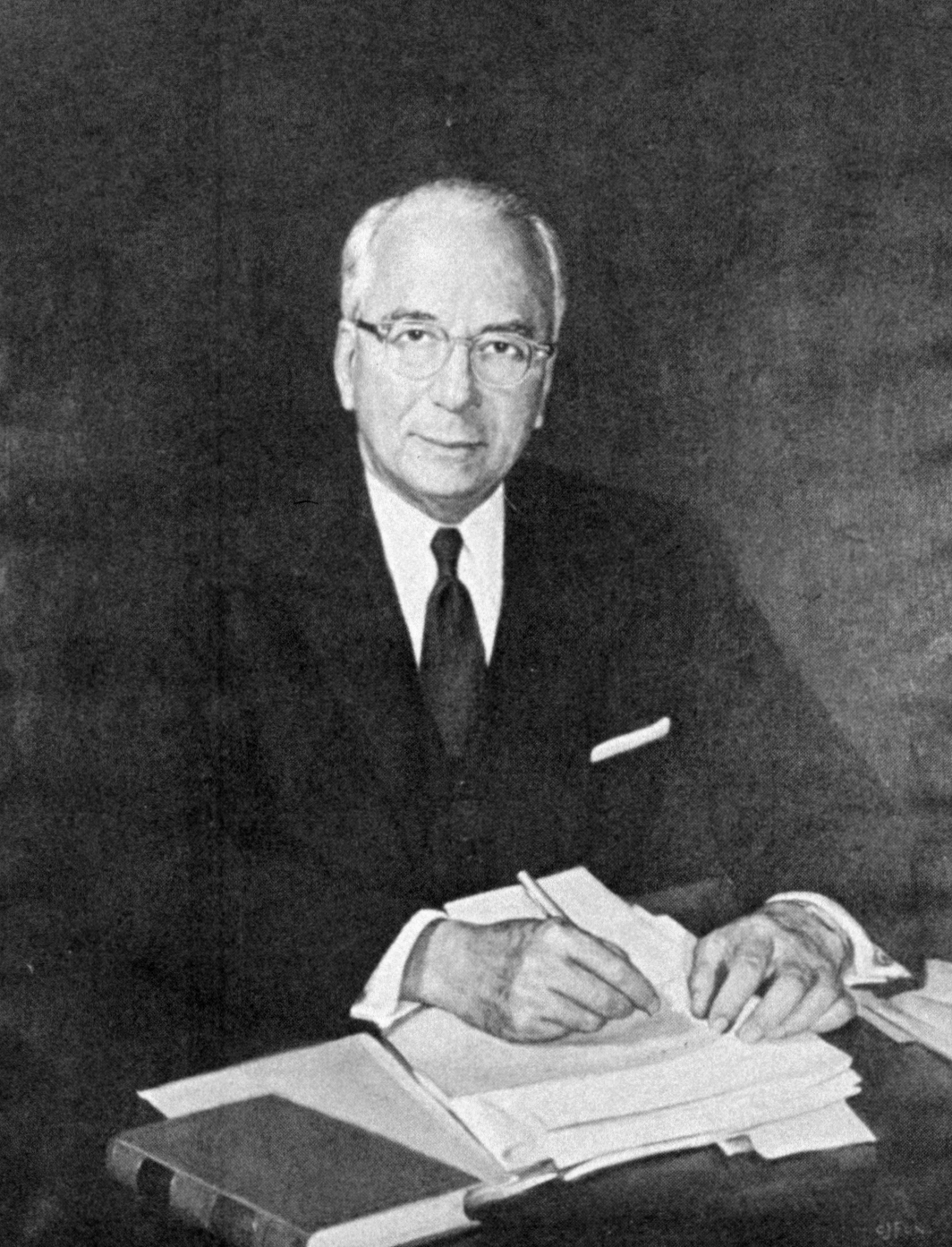
Oppenheimer is a 2023 movie about the father of the atomic bomb, J. Robert Oppenheimer, starring Cillian Murphy as the titular physicist. The movie is easily split into three parts, focusing on the man, his creation, and what it cost him. The first part of the movie shows his communist background and education in physics. The middle section of the movie focuses on his leadership at Los Alamos National Laboratory (where the bomb was built), rising resistance against the bomb, and a successful test run of the bomb. Finally, the third section deals with Oppenheimer’s struggles after the bomb is used, the security hearings set up as a kangaroo court to strip Oppenheimer of his security clearance, and the presidential cabinet confirmation hearings of Lewis Strauss, the antagonist, who set up the anti-Oppenheimer security hearings due to a vendetta. The movie's three time periods are all cut into each other, so while it is linear, events do not play out entirely linearly. Interestingly, Strauss's confirmation hearings are shot in black and white.
Oppenheimer studies physics abroad across Europe before coming back to the United States and teaching at Berkeley, where he becomes good friends with fellow physics professor Ernest Lawrence. At Berkeley, Oppenheimer explores Communist and leftist circles in the 1930s, where he meets his lover, Jean Tatlock. Oppenheimer never joins the Communist Party but is supportive of their causes and supports a possible union of physicists. He then meets “Kitty” Katherine Puening with whom he begins an affair, and before long Kitty leaves her husband for Oppenheimer. General Leslie Groves, director of the Manhattan Project, then approaches Oppenheimer, saying that many people told him that Oppenheimer would be a bad fit for the Manhattan Project, but Oppenheimer convinces Groves that he would lead it well. In New Mexico, the military builds a mini city to develop the bomb, and Oppenheimer recruits top physicists from around the country. The development of the bomb or the “gadget” as they call it, takes over two years. Leading up to the testing of the bombs, many of the scientists become anxious and worry about how the bombs will be used. After Hiroshima and Nagasaki are bombed, Oppenheimer begins to feel incredibly guilty but chooses to embrace his “rock star” persona being gifted to him by the American people. He joins the Atomic Energy Council (AEC) where he has some skirmishes with the council's head, Lewis Strauss. Because of these skirmishes, Strauss develops a vendetta against Oppenheimer. Strauss orchestrates Oppenheimer's upcoming security clearance meeting to strip him of his government clearance. Later, Strauss is at the center of a senate confirmation hearing so he can be on the president's cabinet. However, a scientist who worked on the Manhattan Project and was against using the bombs on Japan speaks at the confirmation hearings and exposes Strauss’s previous actions against Oppenheimer. Strauss is then denied at the confirmation hearings. Oppenheimer is a visually stunning movie that ties together a singular man’s life and an all-encompassing worldwide legacy.

Analysis
Nolan creates a retelling of Icarus based on a book titled American Prometheus. Oppenheimer, Strauss, and the United States played with fire and got burned. The creation of nuclear weaponry was motivated by a thirst for power with the arrogant idea that the United States could control how nuclear would spread, and establish US hegemony. Oppenheimer and the United States’ relationship with nuclear weapons exist on parallel paths. Ultimately, Oppenheimer shows how the power struggles over nuclear weaponry all have one hubristic but fatal flaw: the idea that humanity can control nuclear weaponry.
This is a movie about hubristic power struggles. Oppenheimer and Strauss both believe that they have or should have power over nuclear weaponry, both are turned powerless. The United States government funds and creates nuclear weapons with the ideal that these weapons could further U.S. hegemony through capitalism and violence. In fact, Oppenheimer is seen as a threat to the U.S. government and the AEC because he represents and works to limit their hegemony. He has been connected to Communism in the past and is against the H-Bomb because of how violent it is, and how powerful it would make the U.S. government and AEC. Throughout the movie, the United States government pompously believes that it can be the sole country to possess nuclear weapons, this ultimately proves false and today nine countries have nuclear weapons. Time and time again, Oppenheimer shows how no single institution or actor can truly control nuclear weaponry, and it is delusional to think otherwise.
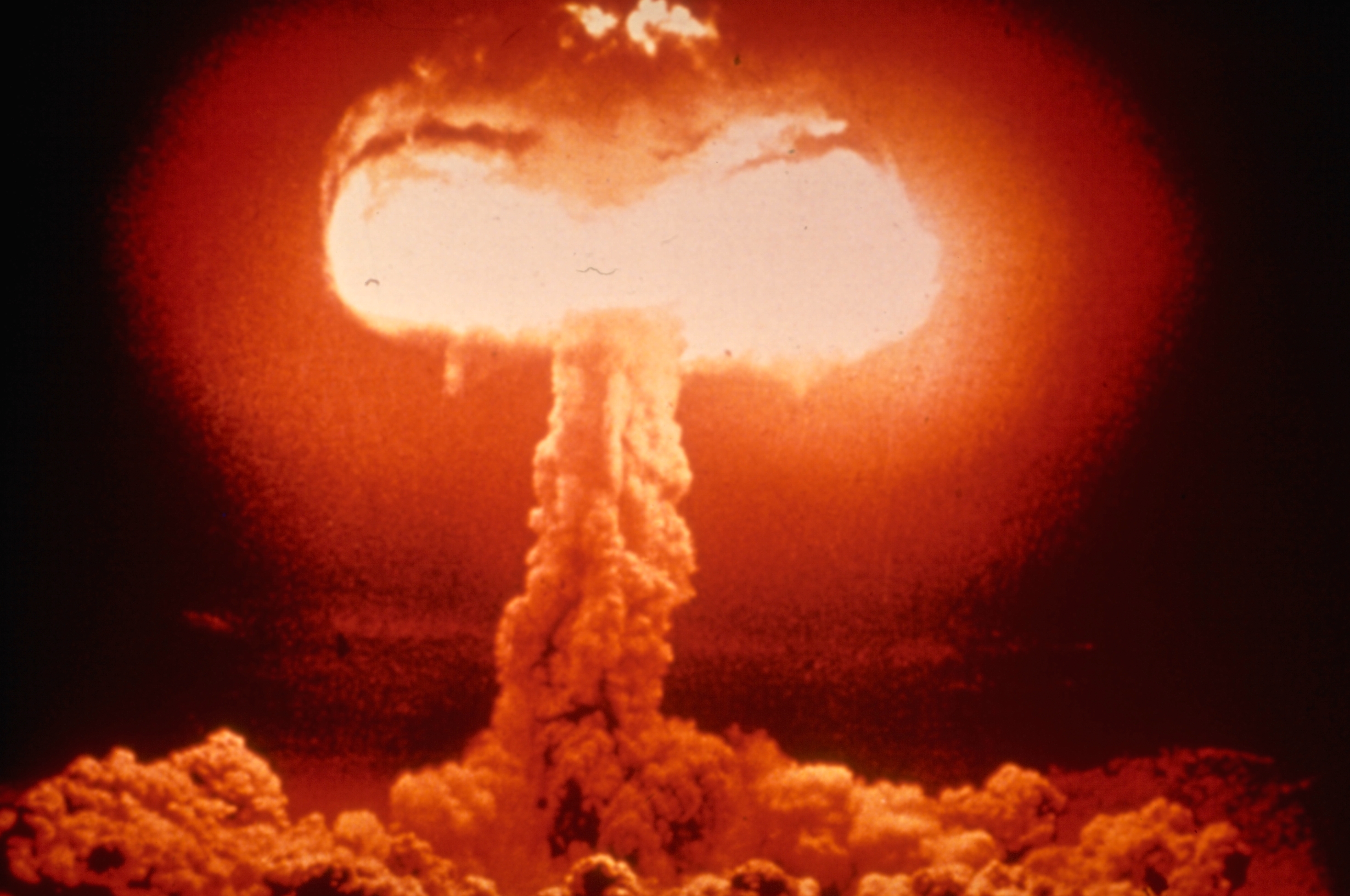
Every agent and institution involved in nuclear weaponry in the movie had their hegemonic dreams crushed, except for one agent: humanity. All the failed attempts at controlling nuclear weaponry speak to a deeper truth: it is impossible to control nuclear weaponry or its spread. Humans created these bombs in a thirst for power to destroy one another, now these bombs have the power and capacity to destroy all of humanity. There is no hopeful end to this story. The last few minutes of the movie show Oppenheimer coming to terms with his actions while coming to an understanding of how these bombs will end the world. The screen shows flashes of the entire earth catching fire, missiles being set off, and bomber planes (02:53:32-02:54:09). Humanity now hubristically believes we can control nuclear weaponry and we have created thousands of these weapons in a power-hungry craze. However, we have not and will not escape the hubristic and power-hungry traps that Oppenheimer, Strauss, and the United States government fell into. These bombs may be our undoing.
Conclusion
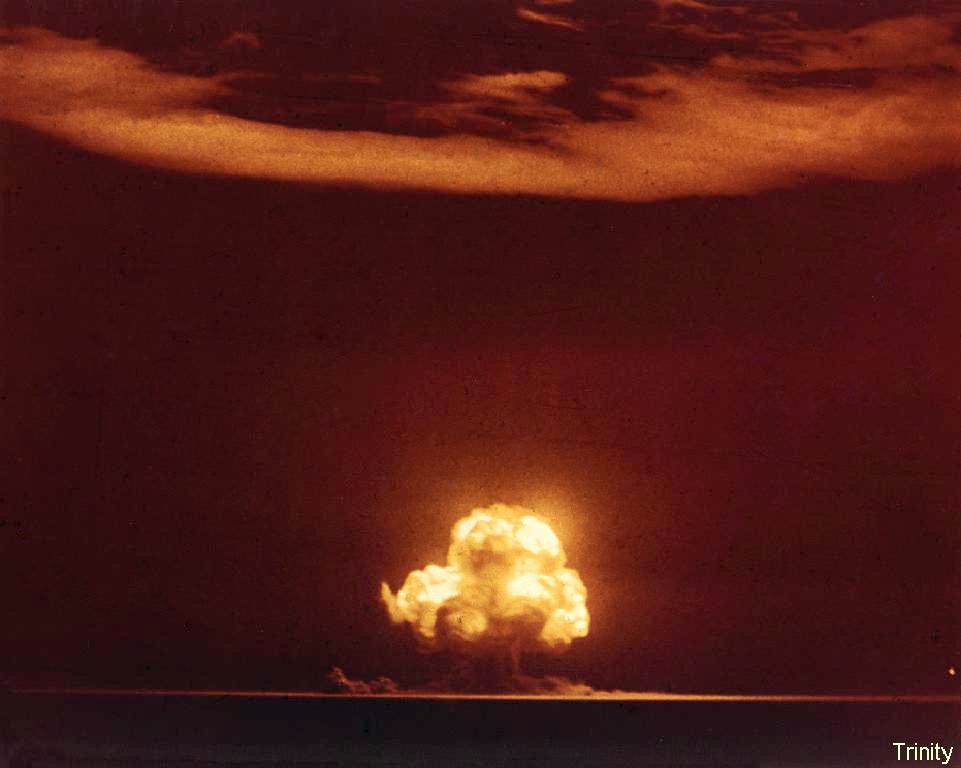
Oppenheimer, Strauss, and the United States government see the creation of nuclear as the peak of man, the peak of man’s intelligence, the peak of man’s desire for power. But Oppenheimer realizes that from this peak there is such a long way to fall. According to the Doomsday Clock, a theoretical clock sharing how close Earth is to nuclear apocalypse with 12 being the apocalypse, it is 90 seconds to midnight, the closest it has ever been. We are the first ever species to design their own extinction. Oppenheimer is a treatise and examination of how hubris, power, and annihilation all exist on the same dice, a dice that has been rolled by the creation of nuclear weaponry. While both Oppenheimer and Strauss’s power lust sealed their fates, our fate is not sealed yet. This movie, this history, and the world we have inherited are a call to action of nuclear disarmament. It is not midnight yet.
Bibliography
Albert, Melissa. "Christopher Nolan." Encyclopedia Britannica, 17 Dec. 2023, https://www.britannica.com/biography/Christopher-Nolan-British-directorhttps://www.britannica.com/biography/Christopher-Nolan-British-director. Accessed 18 December 2023.
Bird, Kai, and Martin Sherwin. American Prometheus: The Triumph and Tragedy of J. Robert Oppenheimer. Knopf Doubleday Publishing Group, 1 May 2006.
Cornbill, Tim. “Cillian Murphy-2014.” Wikimedia Commons, 21 September 2014, https://commons.wikimedia.org/wiki/File:Cillian_Murphy-2014.jpg. Accessed 19 December 2023.

Dunkirk. Directed by Christopher Nolan, Warner Brothers, 2017.
Interstellar. Directed by Christopher Nolan, Warner Brothers, 2014.
Mecklin, John. “Current Time - 2023.” Bulletin of the Atomic Scientists, Science and Security Board, 24 Jan. 2023, thebulletin.org/doomsday-clock/current-time/. Accessed 18 December 2023.
Oppenheimer. Directed by Christopher Nolan, performance by Cillian Murphy, Universal Pictures, 2023.
“Fact Sheets & Briefs.” Nuclear Weapons: Who Has What at a Glance | Arms Control Association, June 2023, www.armscontrol.org/factsheets/Nuclearweaponswhohaswhat. Accessed 18 December 2023.
“FEMA-2720.” Wikimedia Commons, 1957, https://commons.wikimedia.org/wiki/File:FEMA_-_2720_-_Photograph_by_FEMA_News_Photo.jpg. Accessed 19 December 2023.

“JROppenheimer-LosAlamos.” Wikimedia Commons,1944, https://commons.wikimedia.org/wiki/File:JROppenheimer-LosAlamos.jpg. Accessed 19 December 2023.

“Lewis Lichtenstein Strauss pers0164.” Wikimedia Commons, https://commons.wikimedia.org/wiki/File:Lewis_Lichtenstein_Strauss_pers0164.jpg. Accessed 19 December 2023.

“Trinity test (LANL).” Wikimedia Commons, 1945, https://commons.wikimedia.org/wiki/File:Trinity_test_(LANL).jpg. Accessed 19 December 2023.

This page has paths:
- Nuclear Texts José Vergara
